
Island with roof tents – guide to Iceland's highlands and F-roads
Do you dream of driving F-roads in Iceland with a roof tent? Here is our complete guide to Iceland's highlands – route, camping rules, river crossings (fords), packing list, and experiences from seven days in the highlands.
Camping on the roof and traveling by car in Iceland is an unforgettable adventure. The weather, the vast wilderness, and the challenging F-roads make the trip magnificent in a way unlike anything else in Europe. Magical nature that took our breath away time and again.
In September 2025, we took the ferry to Iceland for a seven-day adventure straight into the Icelandic highlands.
Here we share our route, practical tips, and lessons learned from the road.
Quick facts about the Roof Tentters' Iceland Expedition
When: September 2025 (12 days total including ferry).
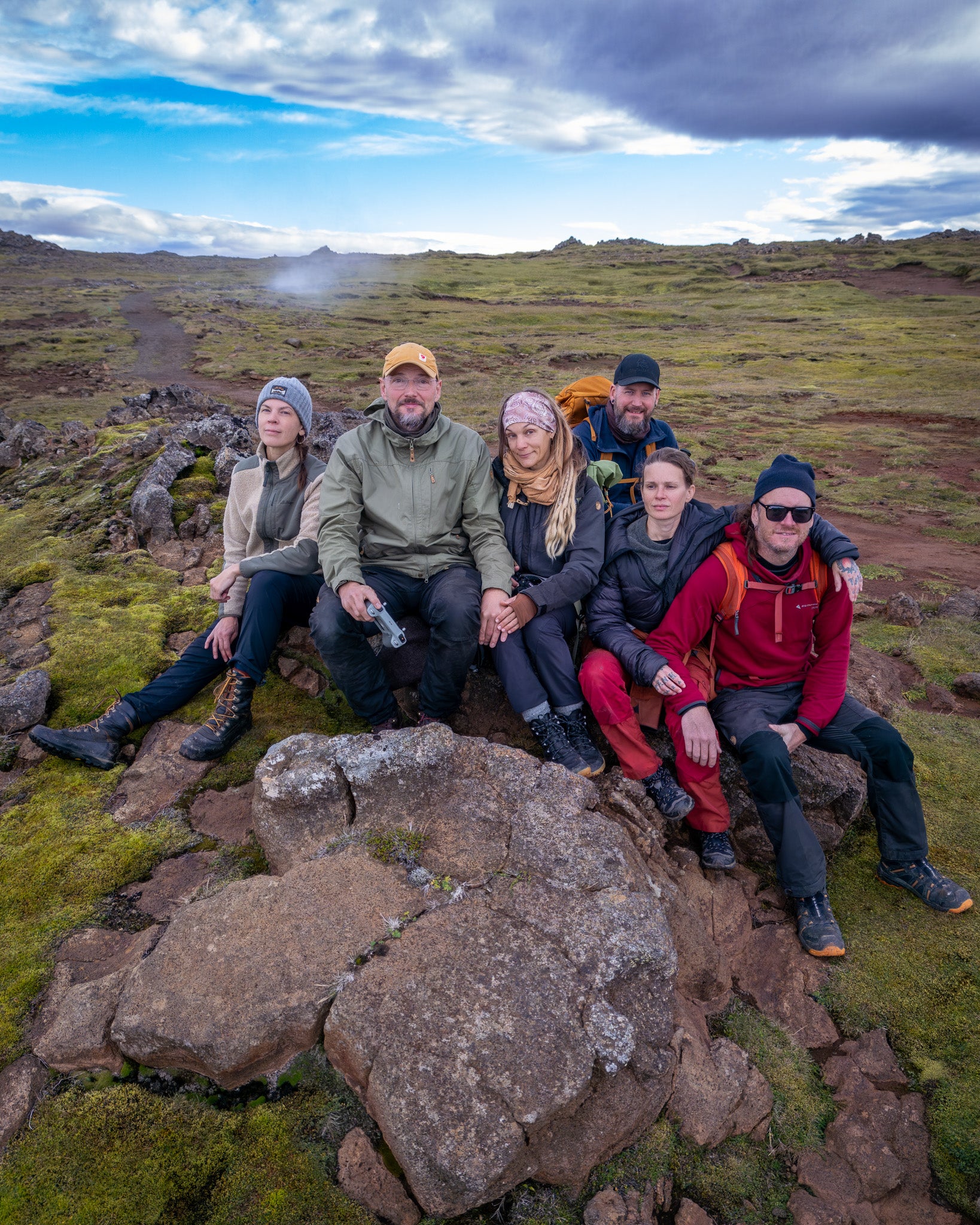
Participants: 6 people divided between two cars.
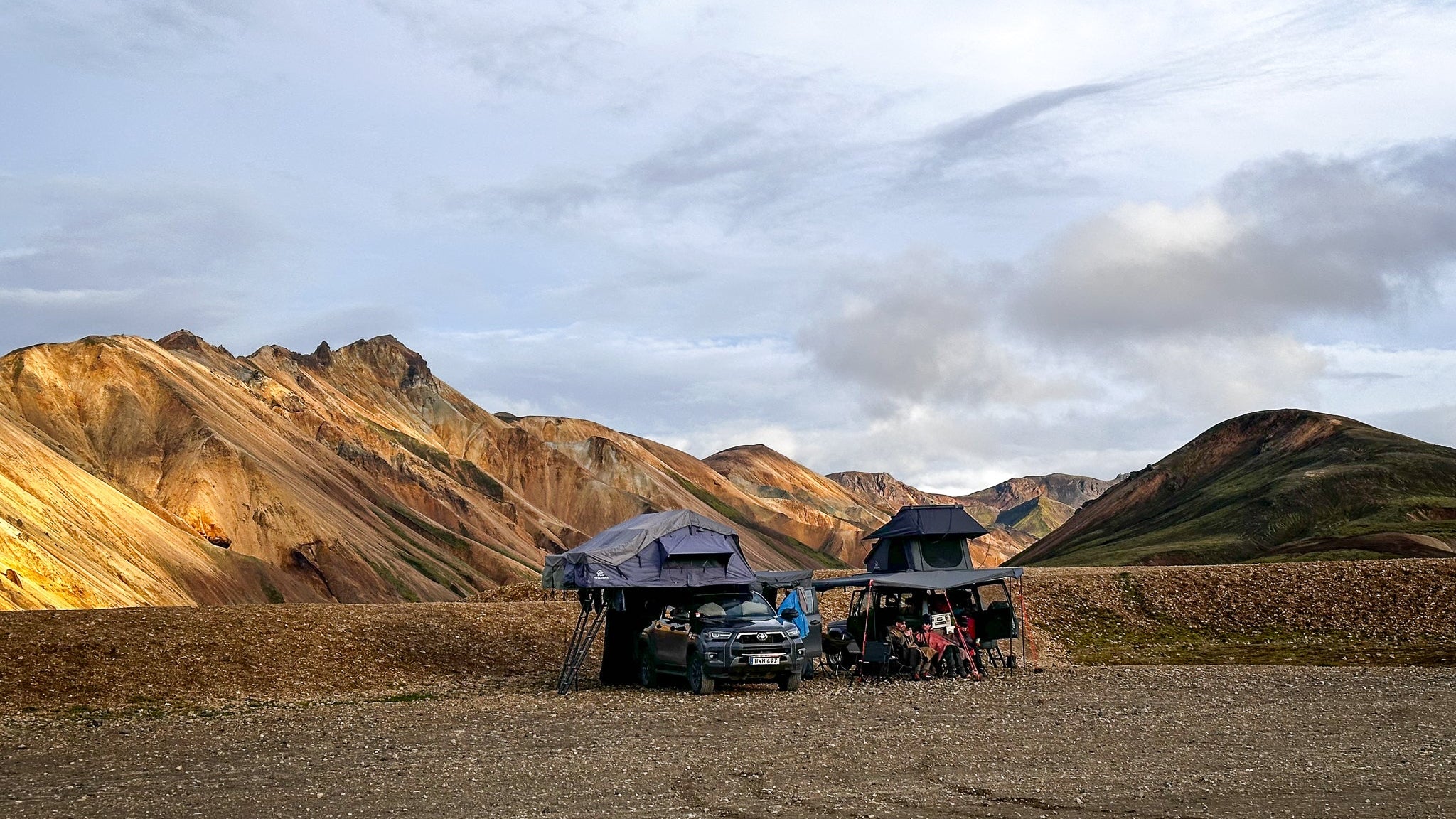
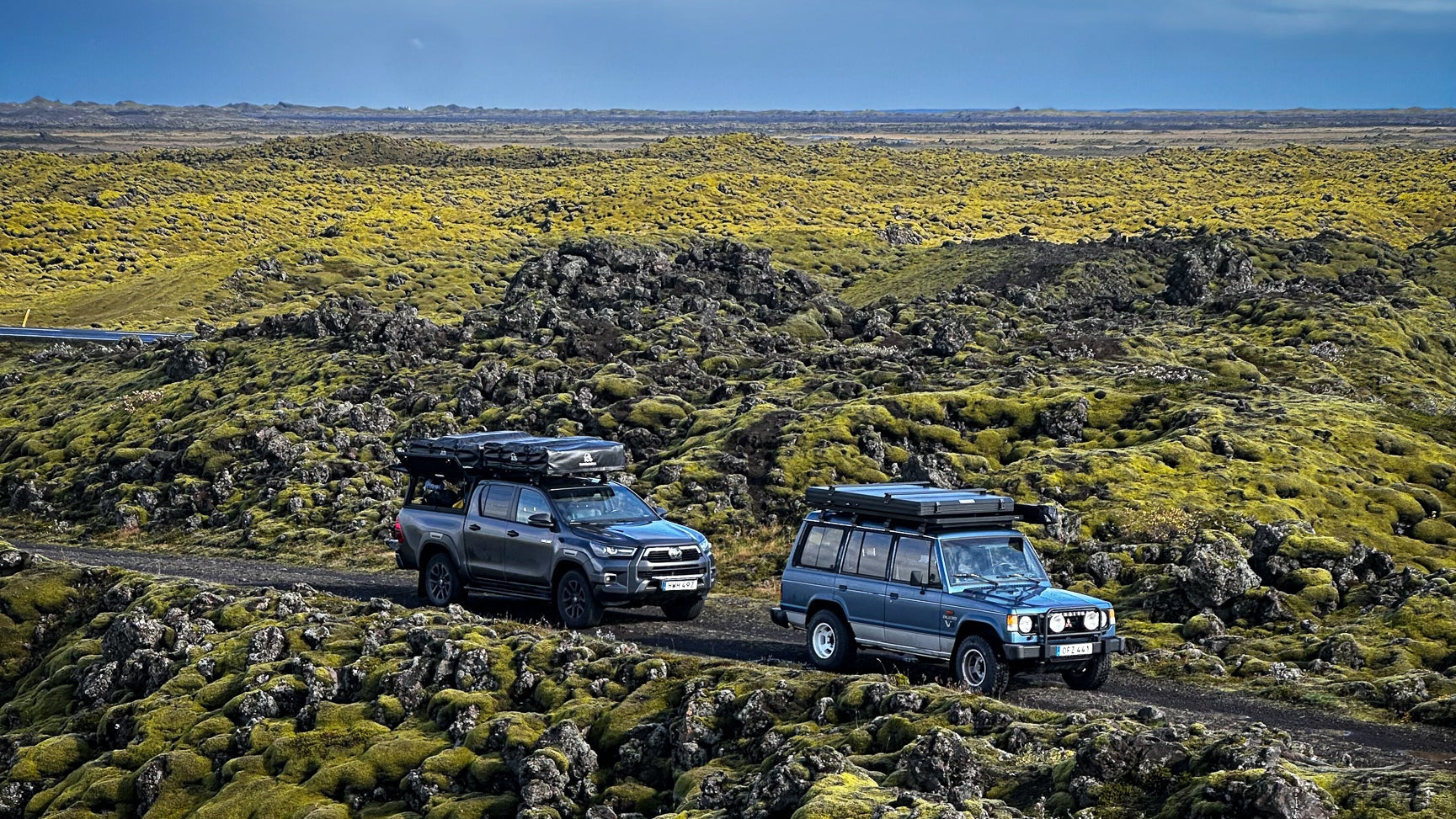
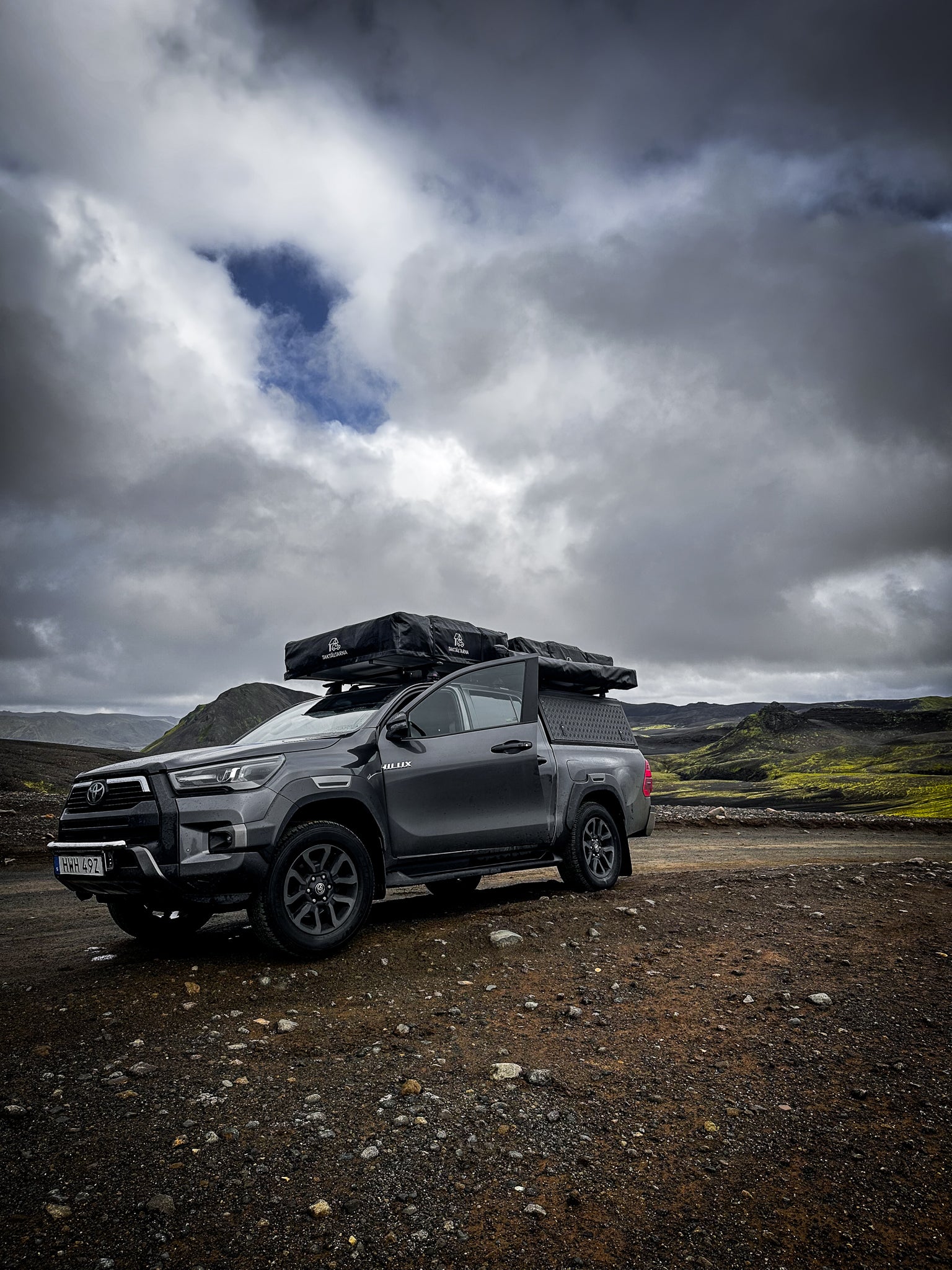
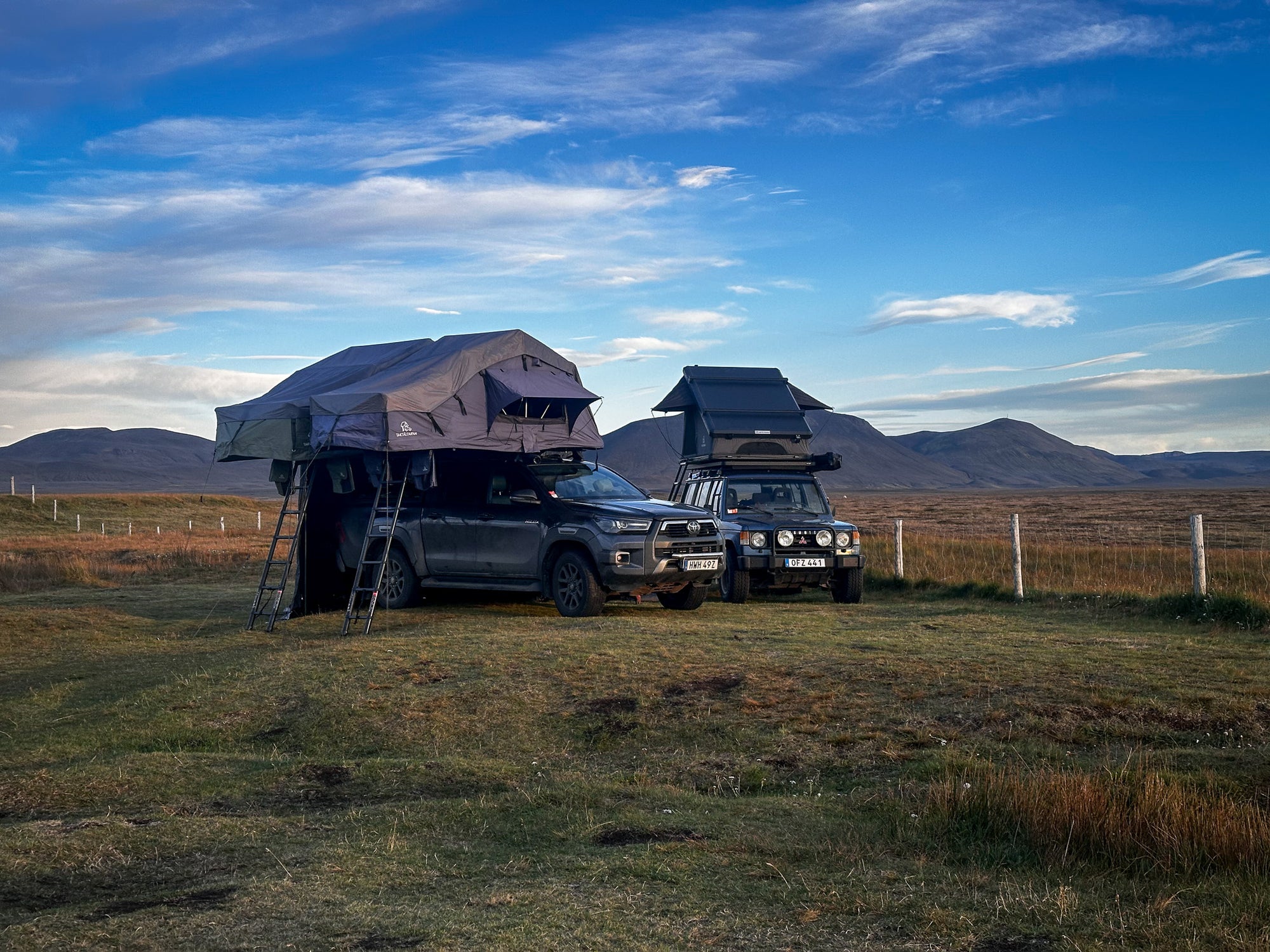
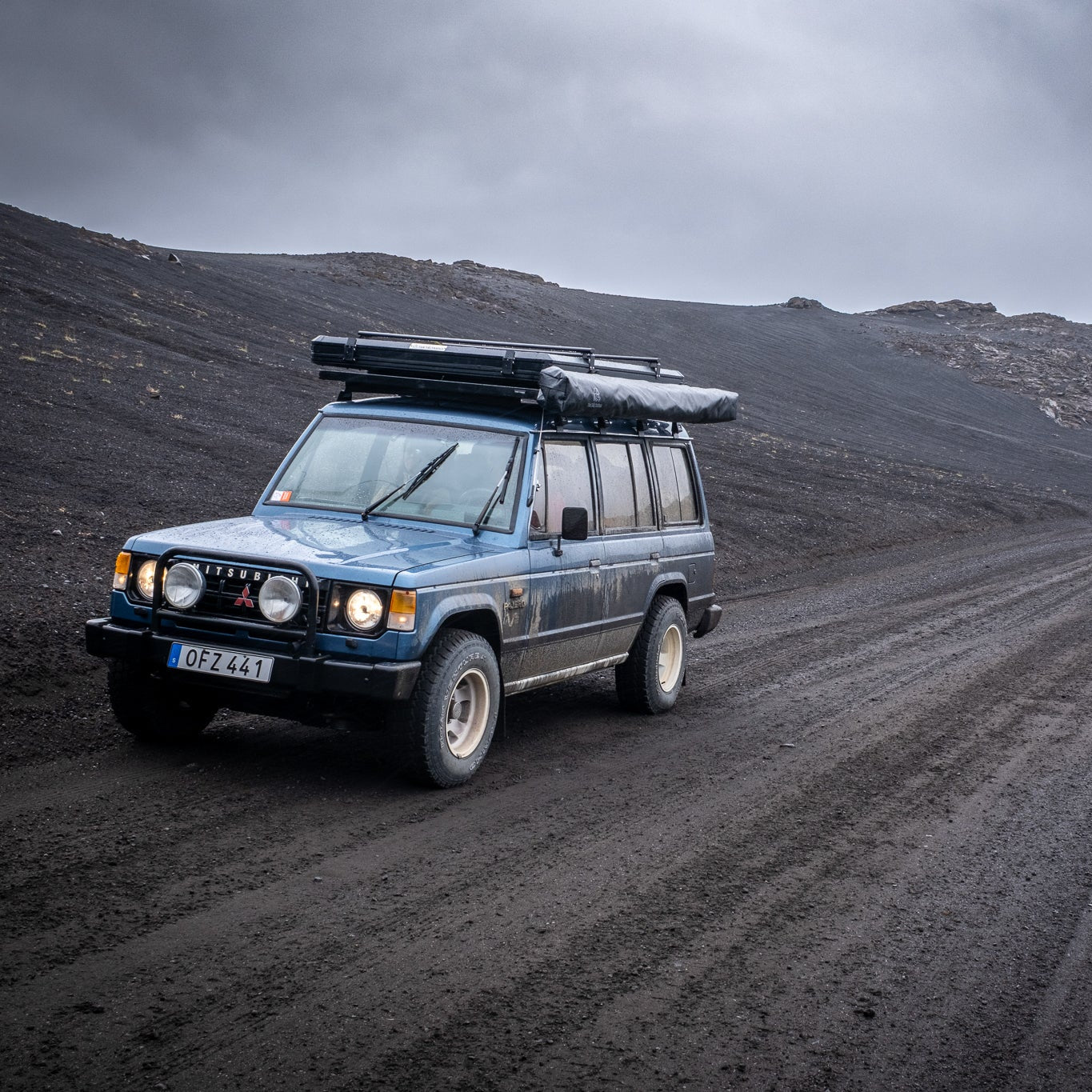
Vehicles: Mitsubishi Pajero -89 & Toyota Hilux -24.
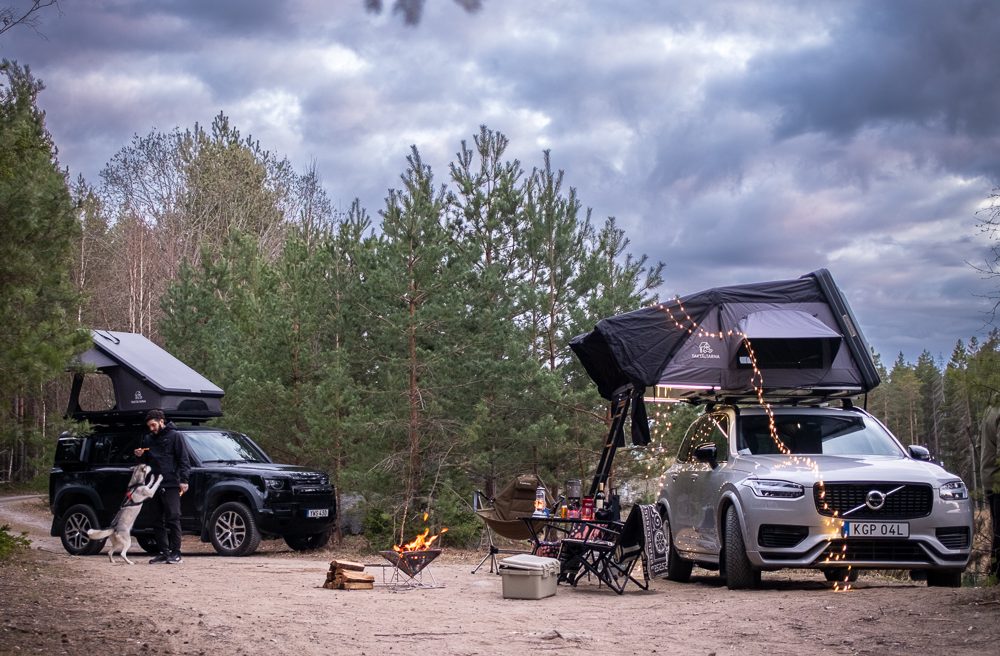
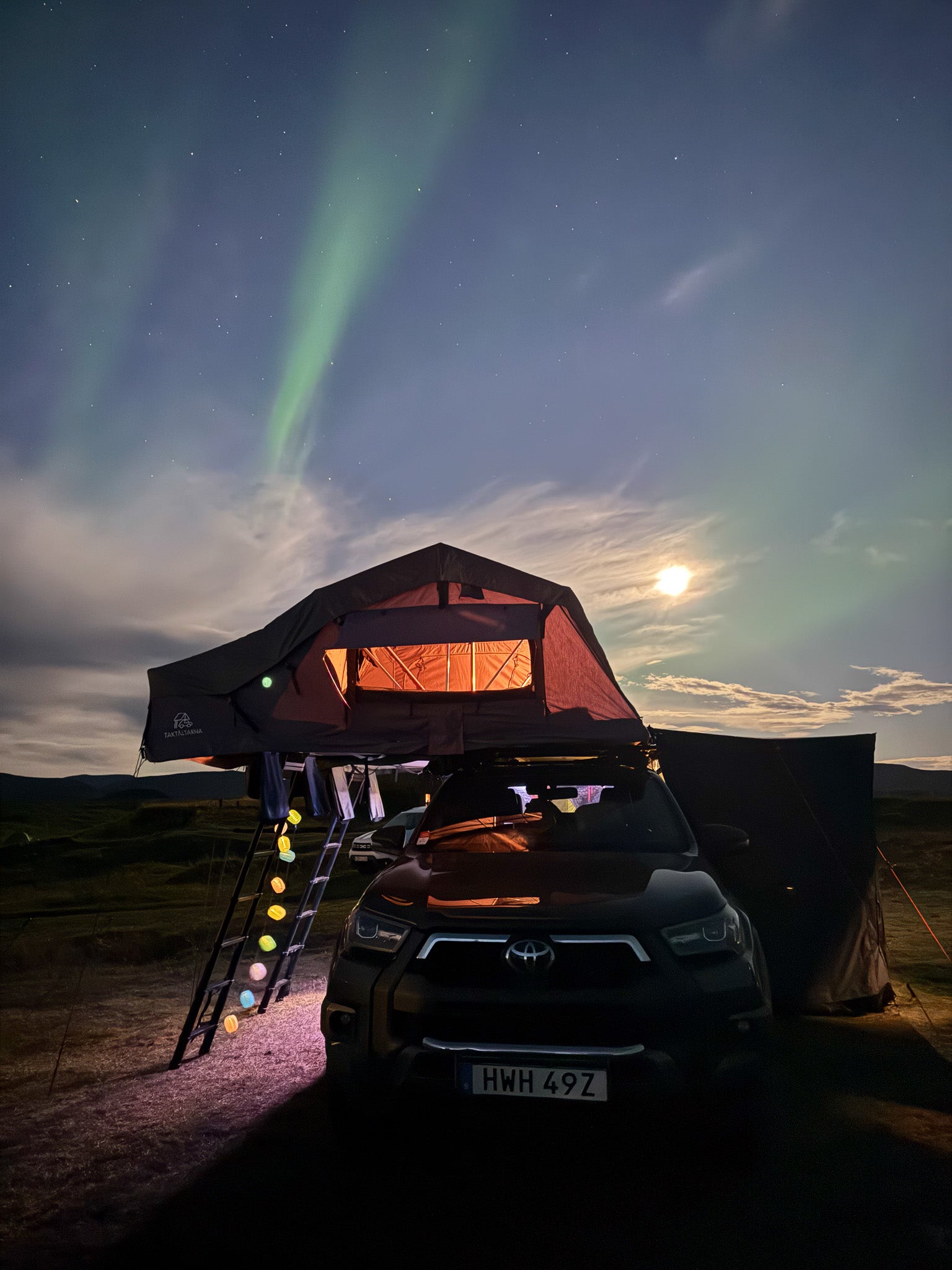
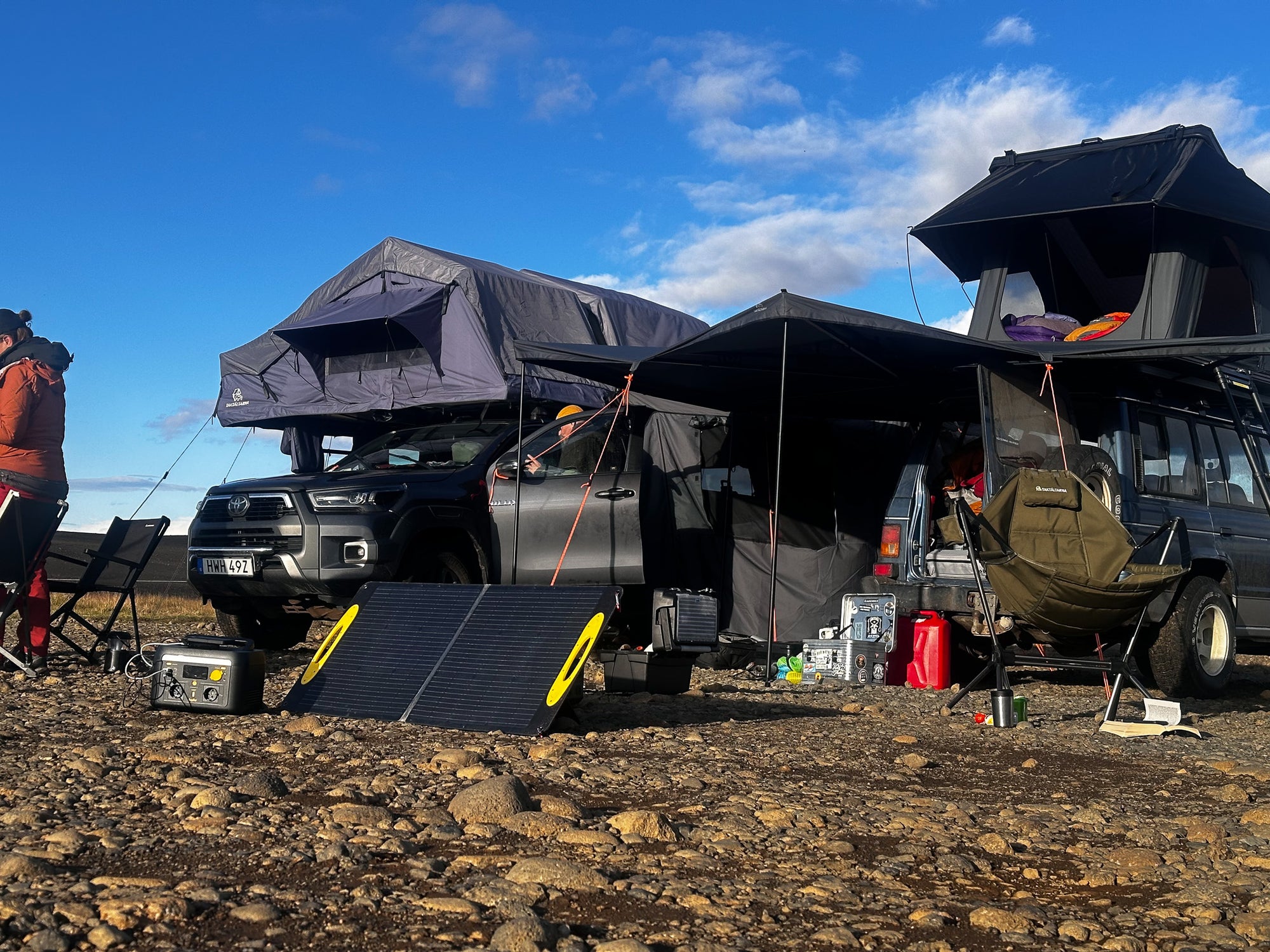
Equipment: The roof tents Blåsten, two Åreskutan tents, and the awning Solfjädern 270 with walls.
Ferry cost: Approximately 45,000 SEK total for five people and both cars.
.
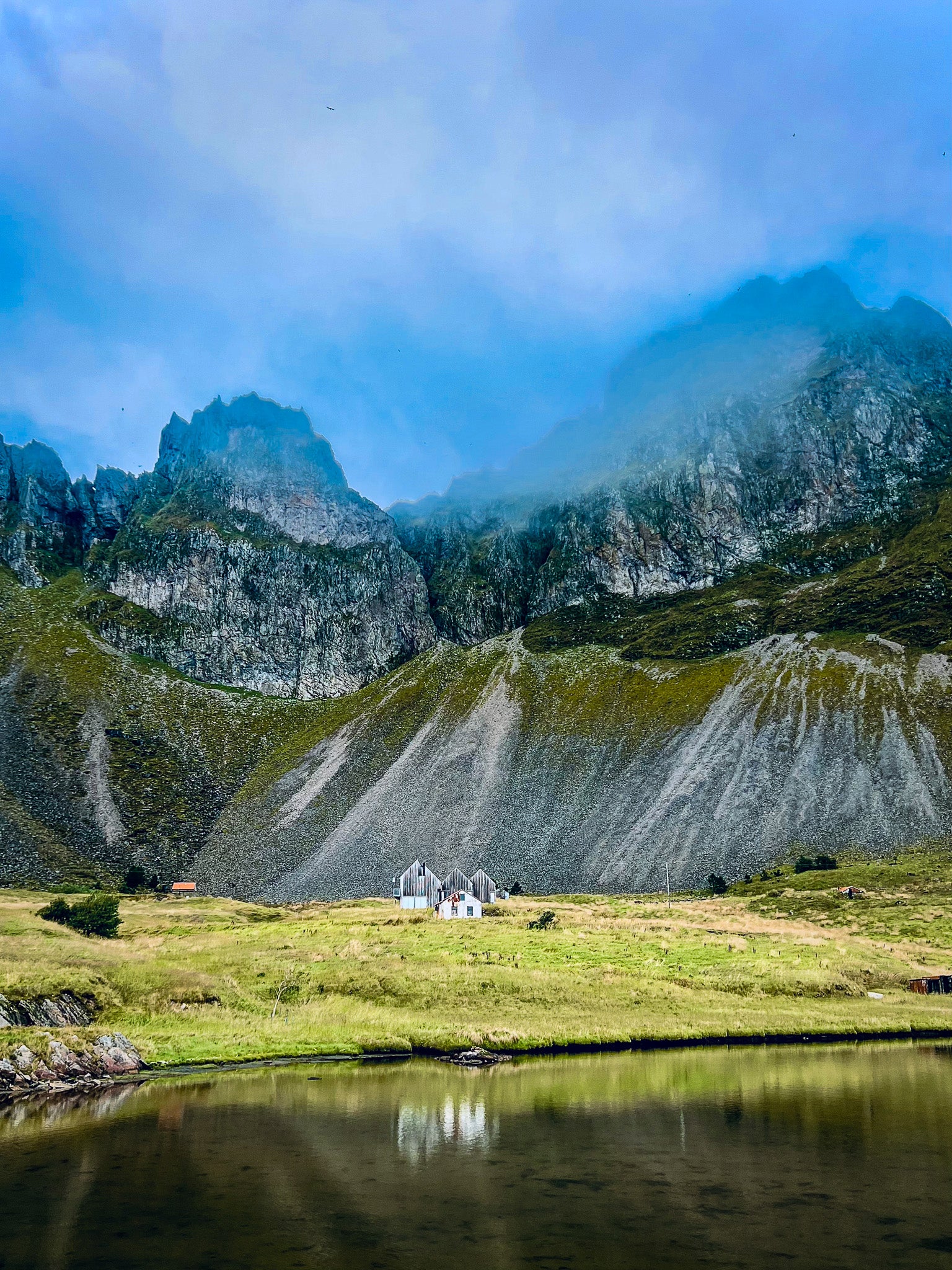
How do you get to Iceland with your own car?
Most people who travel to Iceland choose to fly over and rent a car or campervan on site. But for a true overland experience, your own car with a roof tent is unbeatable.
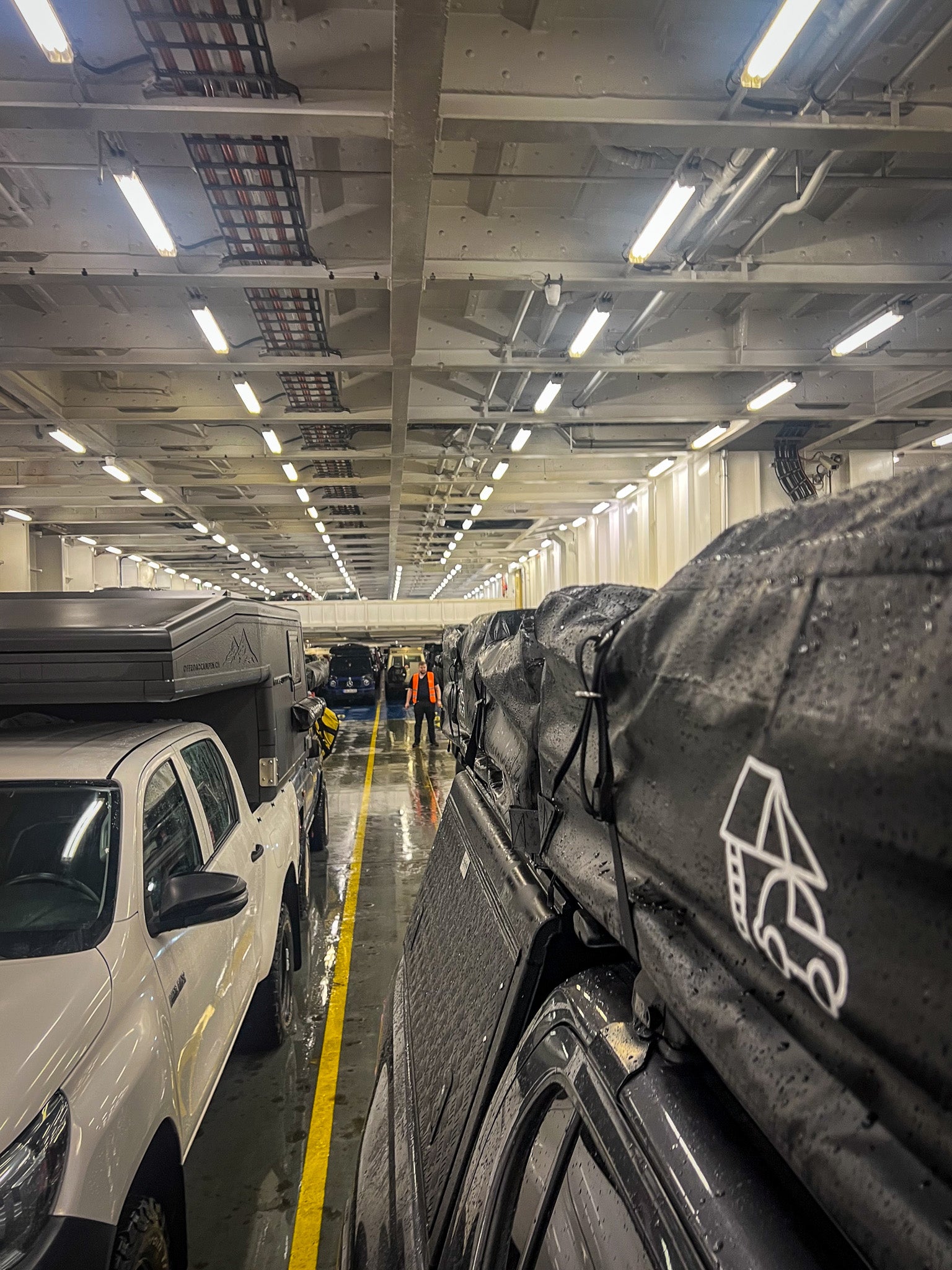
We took the ferry Smyril Line from Hirtshals in Denmark to Seydisfjördur in eastern Iceland.
Travel time: About 2 days there and 2.5 days back. A bonus on the return trip was that we got to go ashore for a few hours in the Faroe Islands' capital Thorshavn.
The experience:
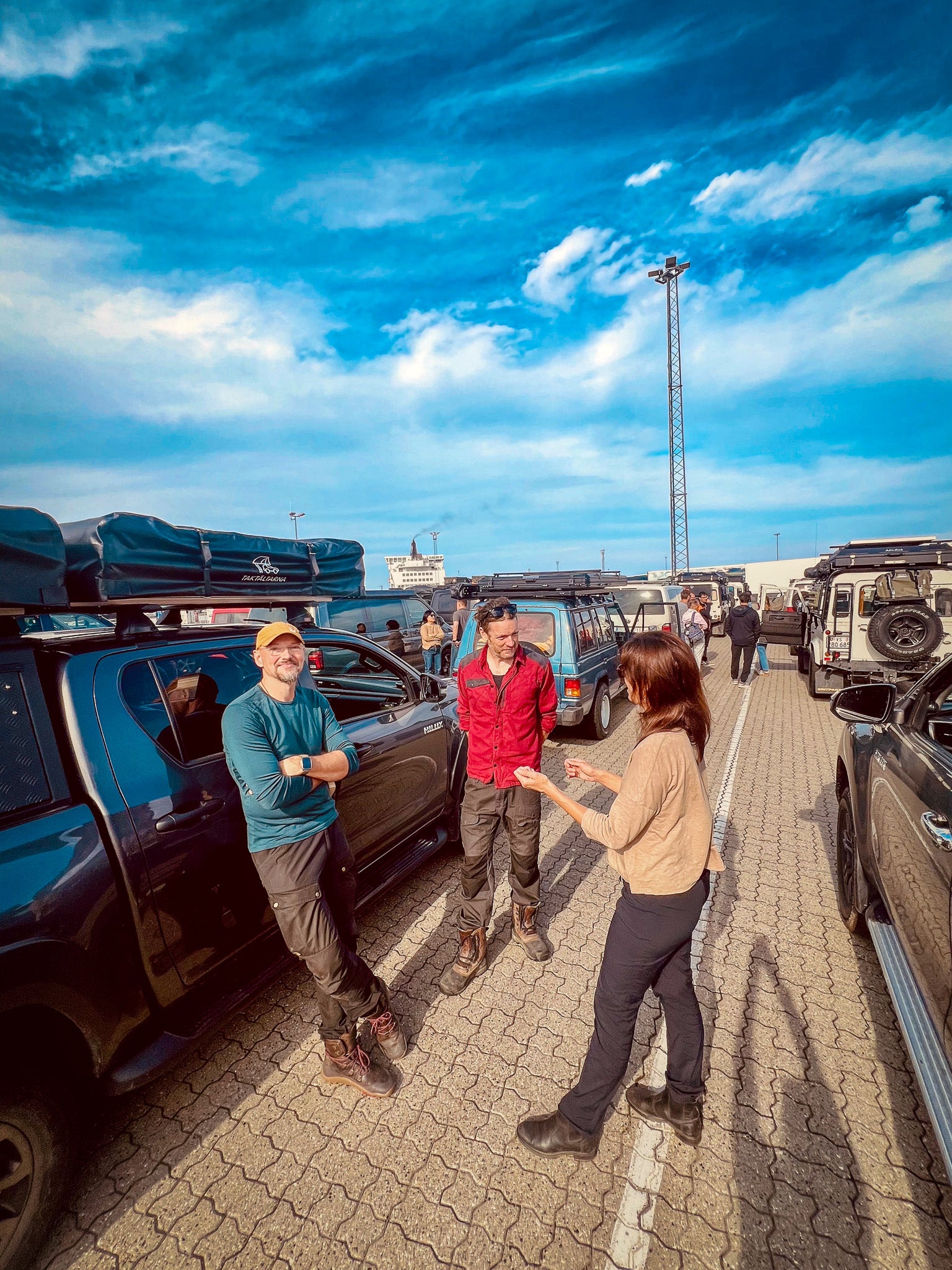
The ferry is a gathering place for adventurers. Standing in line at the harbor is like a car show for powerful overland vehicles. Onboard there is everything from a gym and hot tubs on deck to activities like quizzes and bingo as well as good restaurants.
Tip: Book well in advance! Prices vary greatly and the high season fills up quickly.
Visiting this page on mobile? Swipe left to see more pictures.
Camping in Iceland – rules and practical information
Is wild camping allowed in Iceland?
To protect the very sensitive nature, wild camping has been prohibited in Iceland since 2015. For the same reason, all forms of off-road driving are forbidden.
But don’t be discouraged by this – the campsites in the highlands still feel both remote and "out in the wilderness."
Camping prices: About 150–200 SEK per person per night.
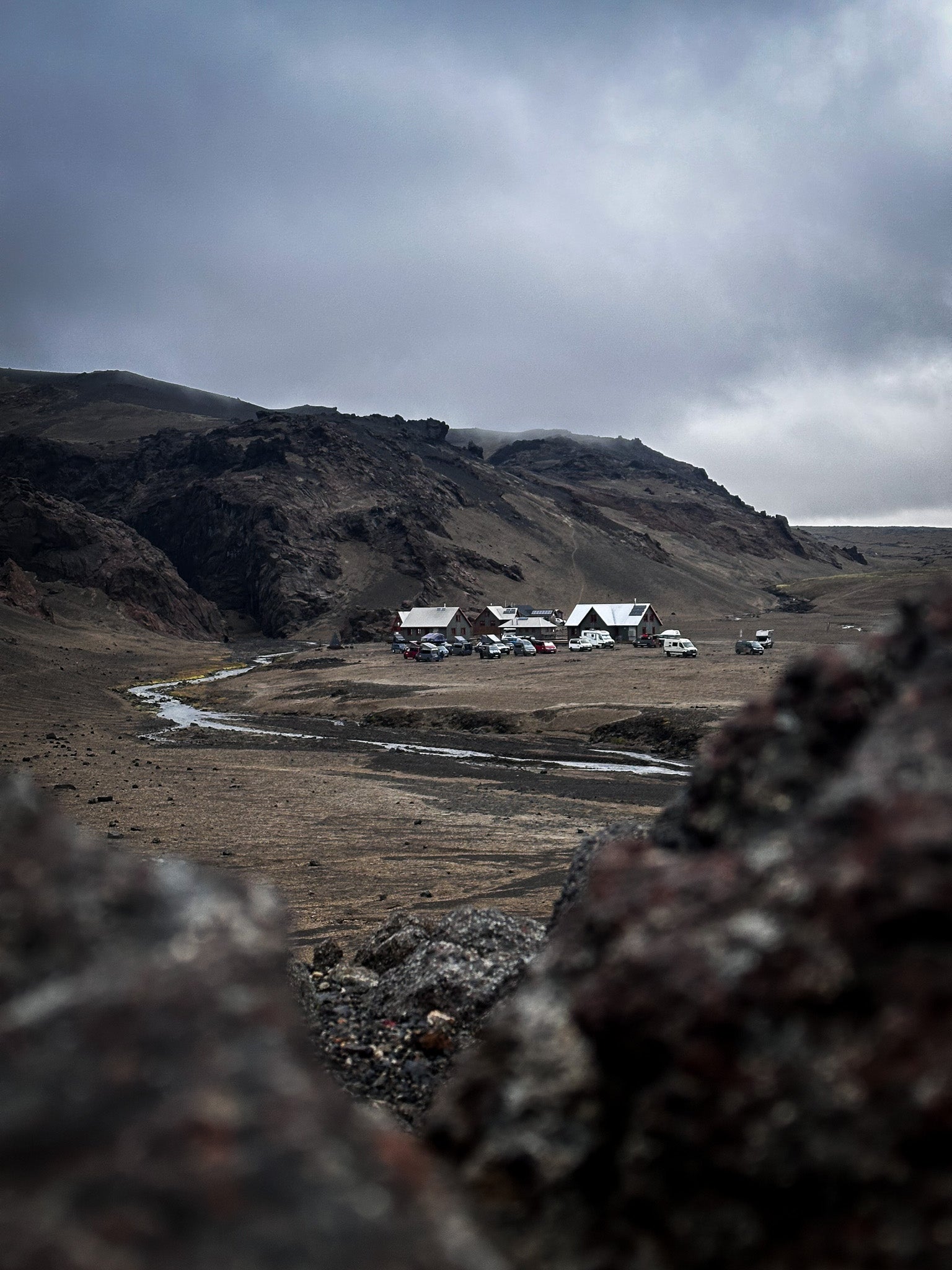
Standard: Often simple but functional. More often gravel/stone than grass as ground. Toilets and dishwashing facilities are almost always available.
Respect the F-roads in Iceland
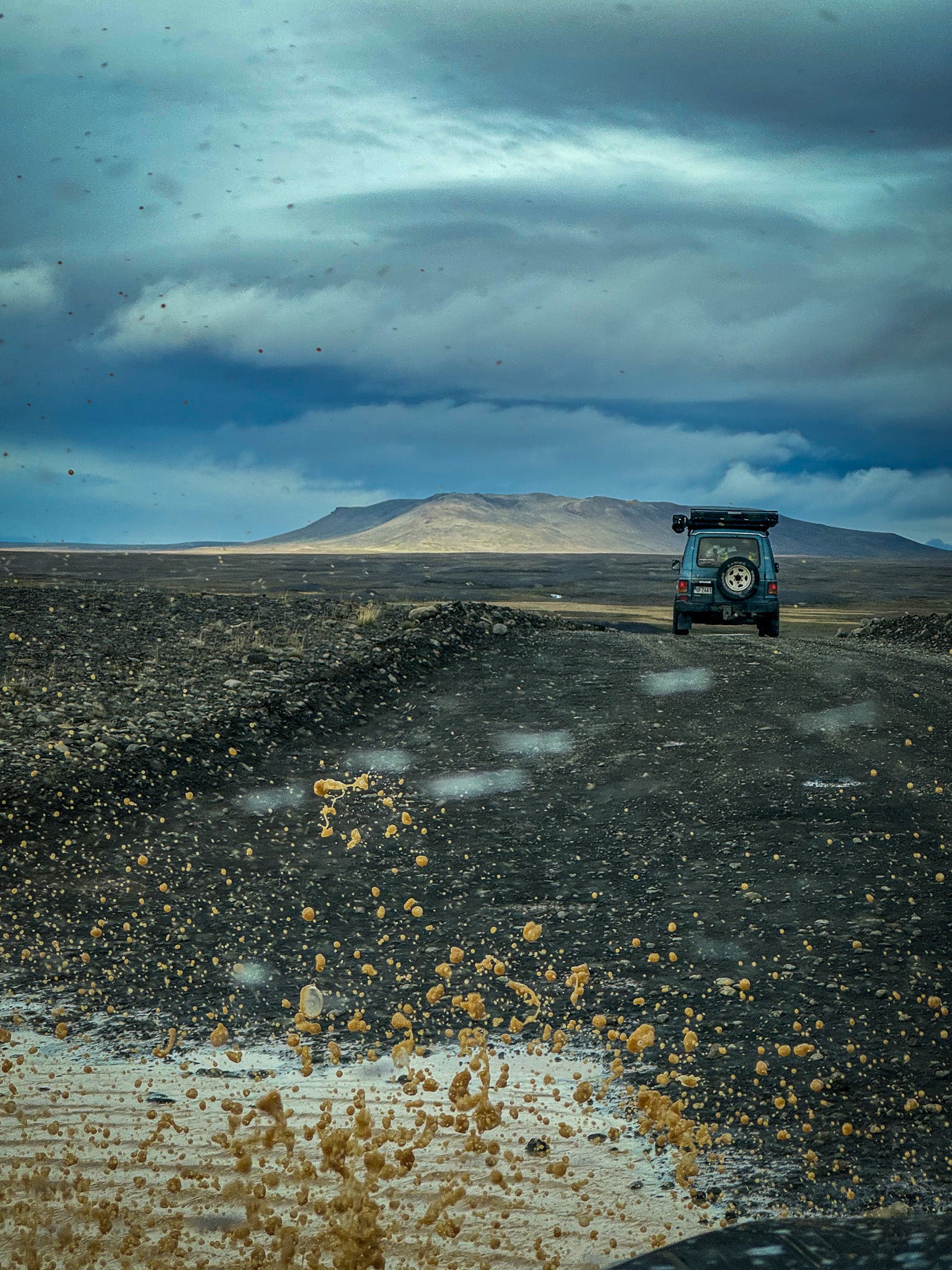
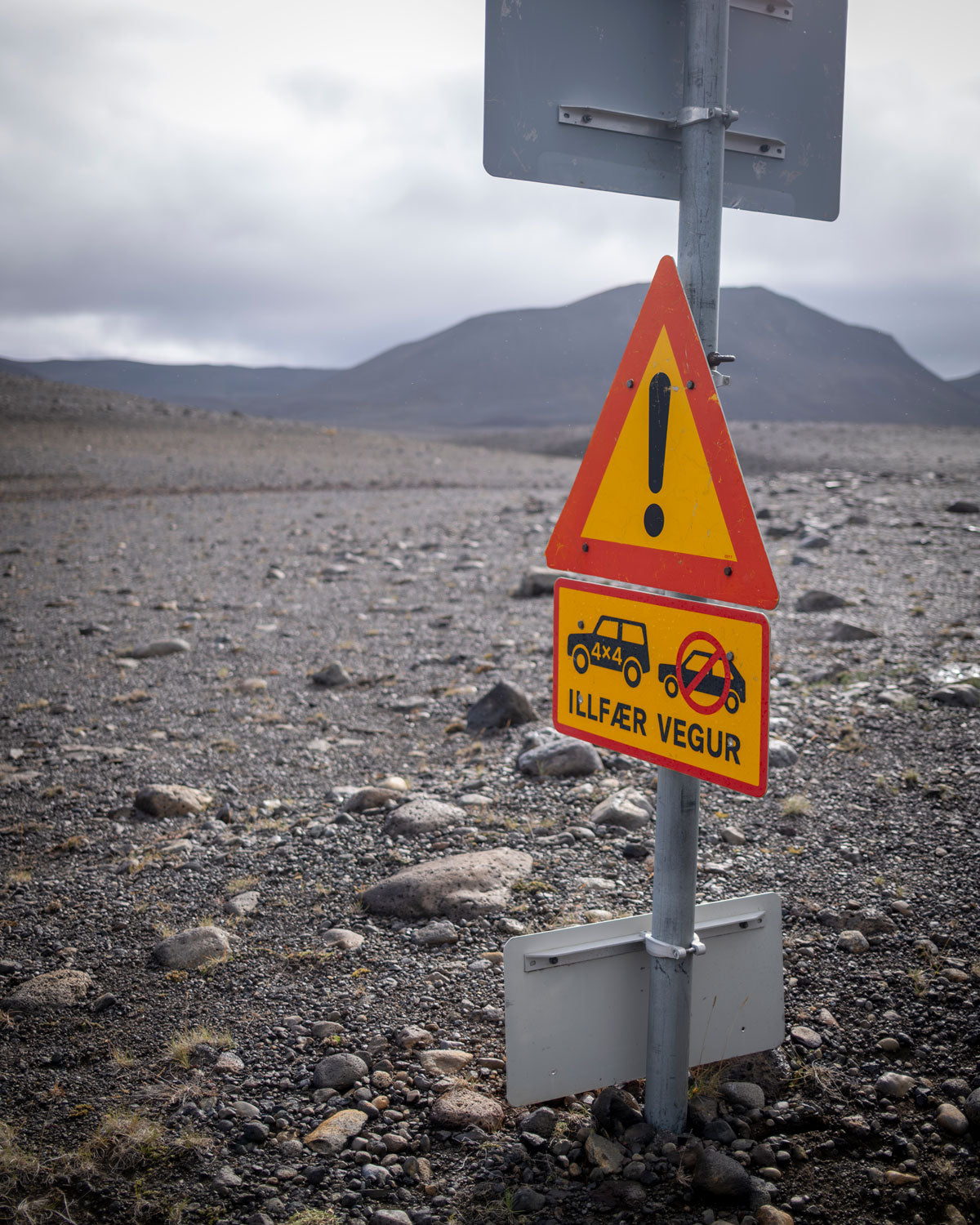
F-roads require that your vehicle has four-wheel drive (4x4) and higher ground clearance. They are often uneven, rocky, and include river crossings.
More info about the F-roads further down in the text.
Opening times: June to the end of September (depending on snow and weather).
Important: Always check road.is before you drive out.
.

3 apps you should have when driving F-roads in Iceland
• Vedur: The best app for local weather forecasts.
• SafeTravel: For safety information and warnings.
• Parka: Convenient payment for parking and campsites.
Packing list & equipment tips for Iceland's highlands
Iceland is known for offering all four seasons in the same day. Sun, rain, wind, and fog take turns without warning. Always pack rainwear and an extra layer — not because you definitely need it, but because you almost always will.
If you are vacationing in Iceland, you need clothes for all weather, and the mindset that weather is part of the experience.
We had temperatures from 0 - 20 degrees during our trip. But only one day with really persistent rain.
> Roof tent with warm sleeping bags
We used winter sleeping bags which made the nights warm despite freezing temperatures outside. For one of the tents, we also had a diesel heater, but this is not a must. The most important thing is to have a warm sleeping bag.
> Awning with walls
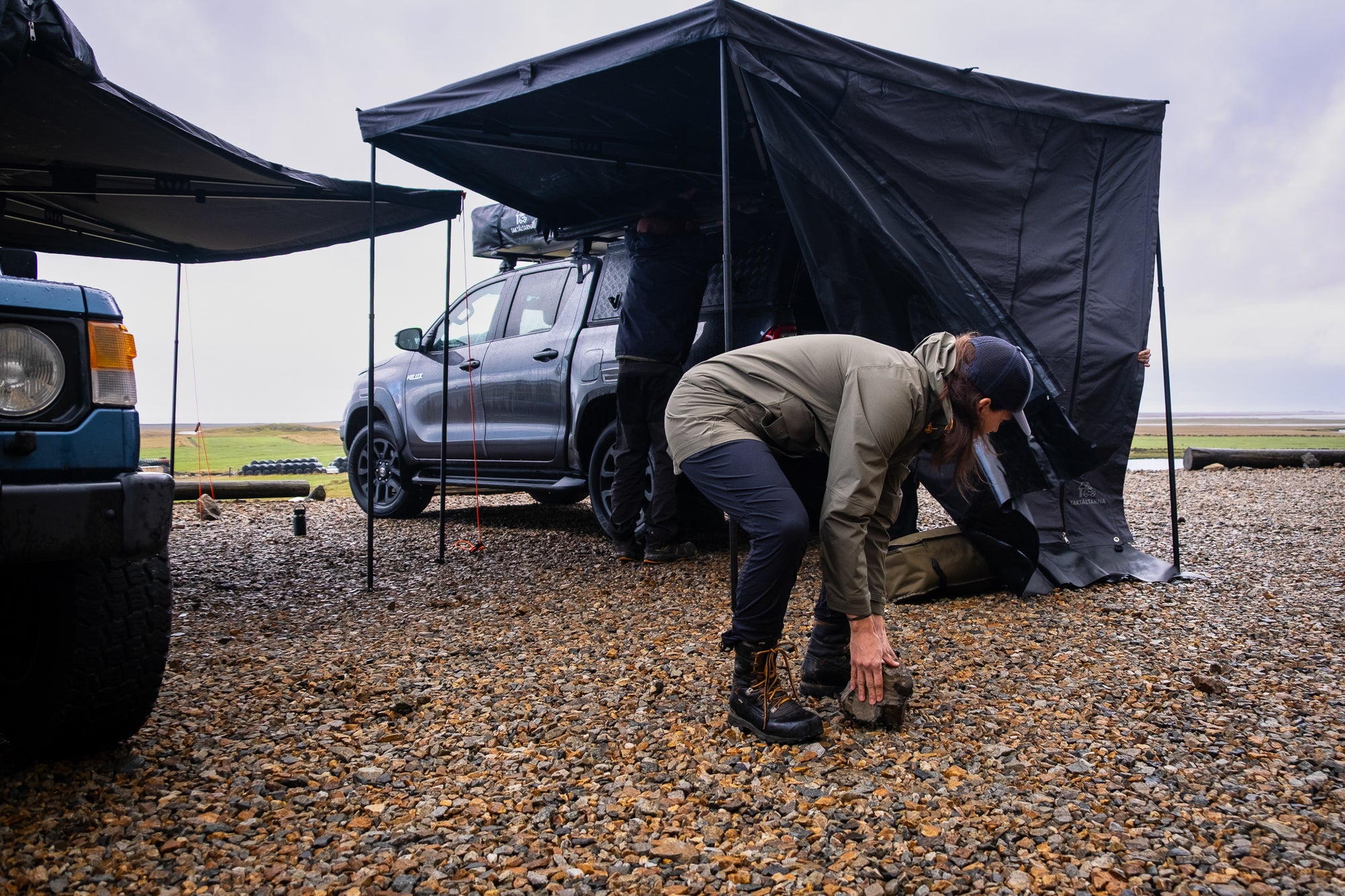
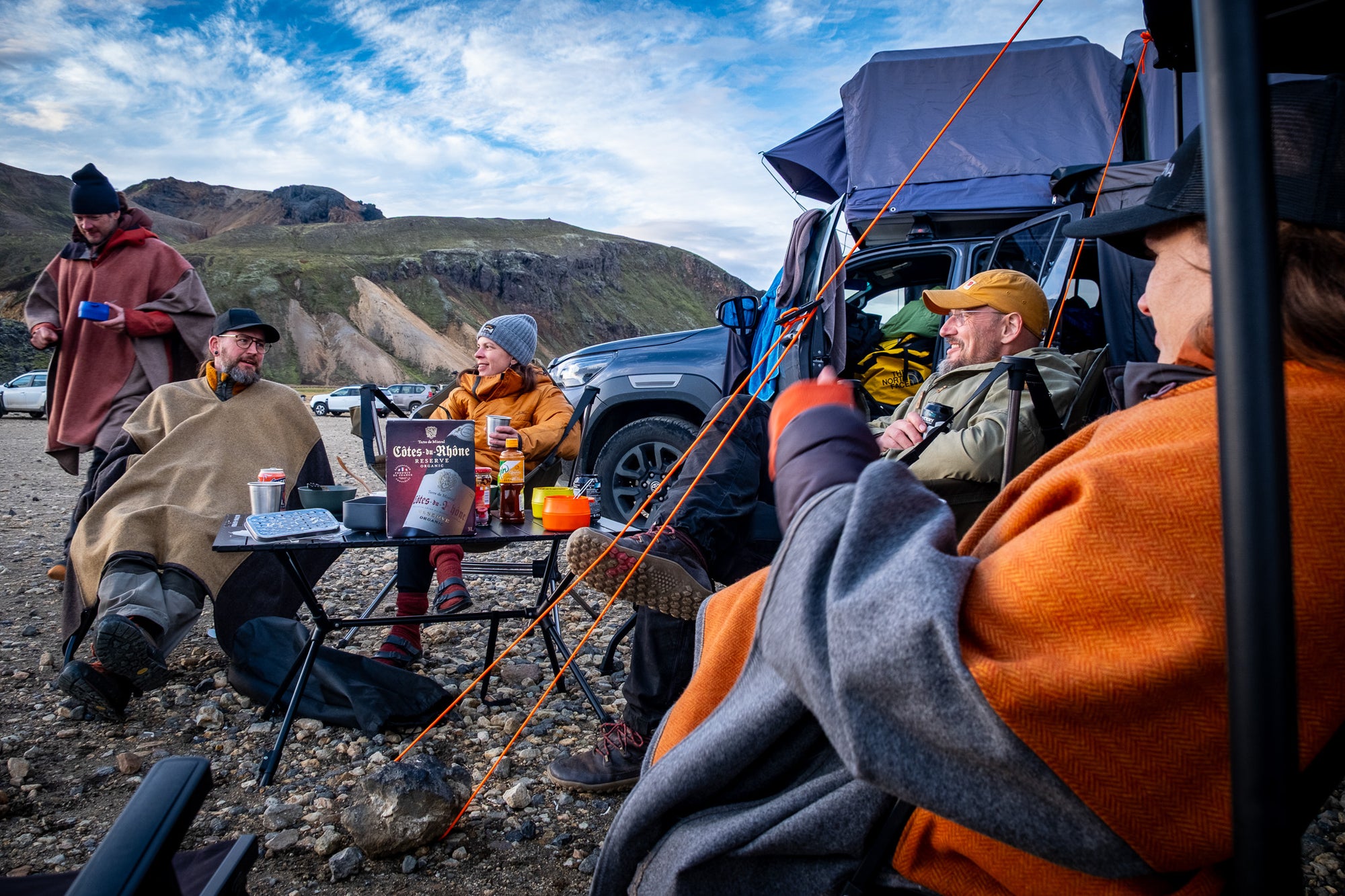
This really added a golden touch to the whole trip. With the Solfjädern 270 awning and accompanying walls, we had a large extra room protected from rain and wind that made our evenings pleasant (and longer).
> Clothes
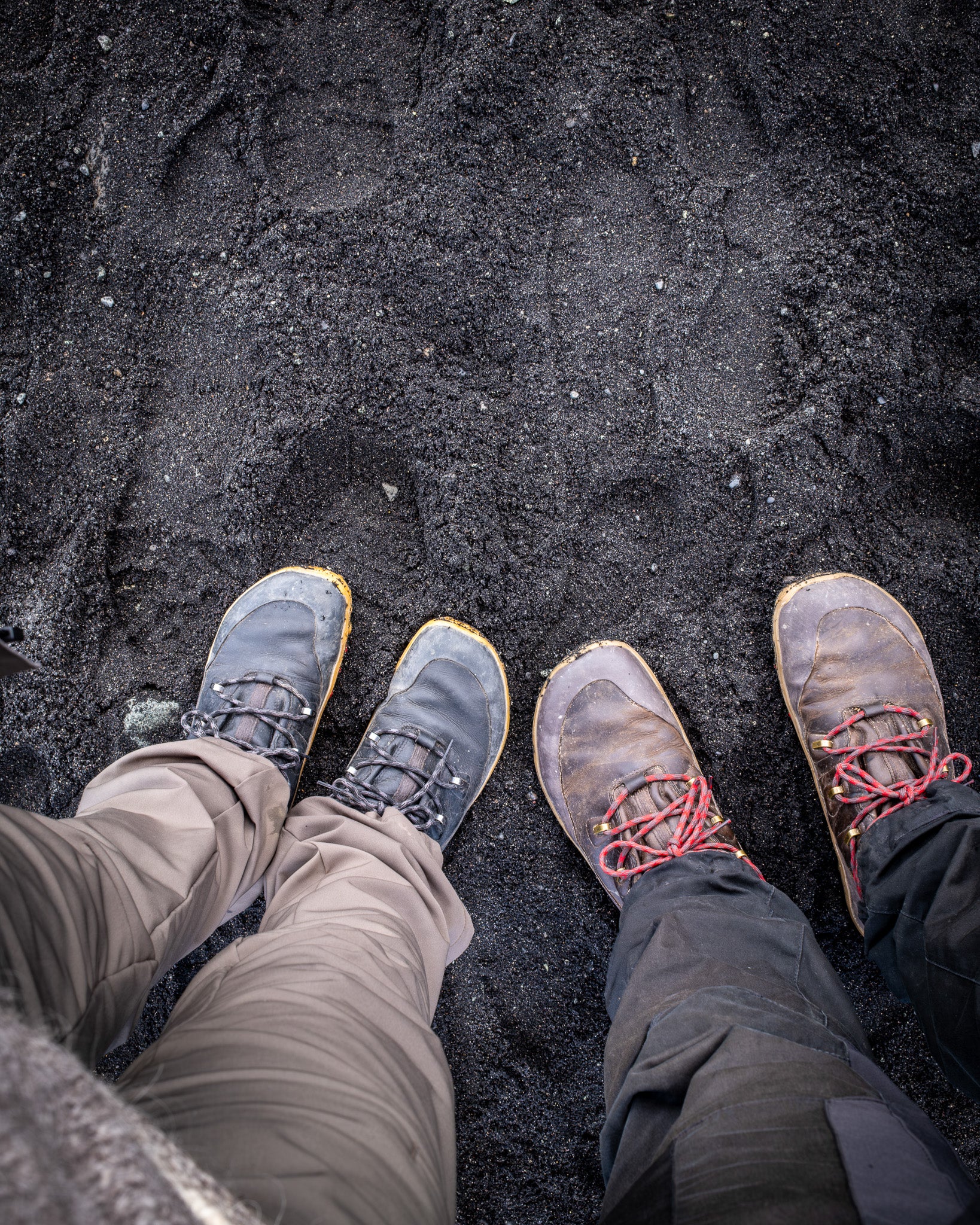
Layer upon layer is the law. Base layer, warm mid-layer, rainwear, hiking boots, and a really warm jacket to wear in the evenings at the camp.
> Cooking
We prepared four ready-made vegan stews at home which we stored in our Dometic Compressor cooler box. It saved us both time and money.
Besides that, we brought ingredients for three dinners as well as breakfast (porridge with extra everything) for all days. This meant we didn’t have to spend time and energy planning food.
> Communication
Walkie-talkies between cars are worth their weight in gold when coverage disappears and to easily communicate when there are several cars. Plus, it’s fun!
> Fuel
Here you need to plan your driving, inside the highlands there are no gas stations. We brought two extra fuel cans just in case but never needed to use them.
> Safety
If something goes wrong inside the highlands, it can take a long time before help arrives. First aid kit, a small compressor to refill air, fire extinguisher, high boots for fording.
> Paper map
We bought a classic road map when we arrived in Iceland. Unlike Google Maps, all fords are marked on it and we also found several campsites that were not in the app. Besides, it makes trip planning more fun.
Iceland's amazing F-roads
The Icelandic F-roads are mountain roads that lead into Iceland's dramatic and often inaccessible interior. They are marked with an "F" before the road number, for example F208 or F35, and require you to drive a four-wheel drive vehicle (4x4).
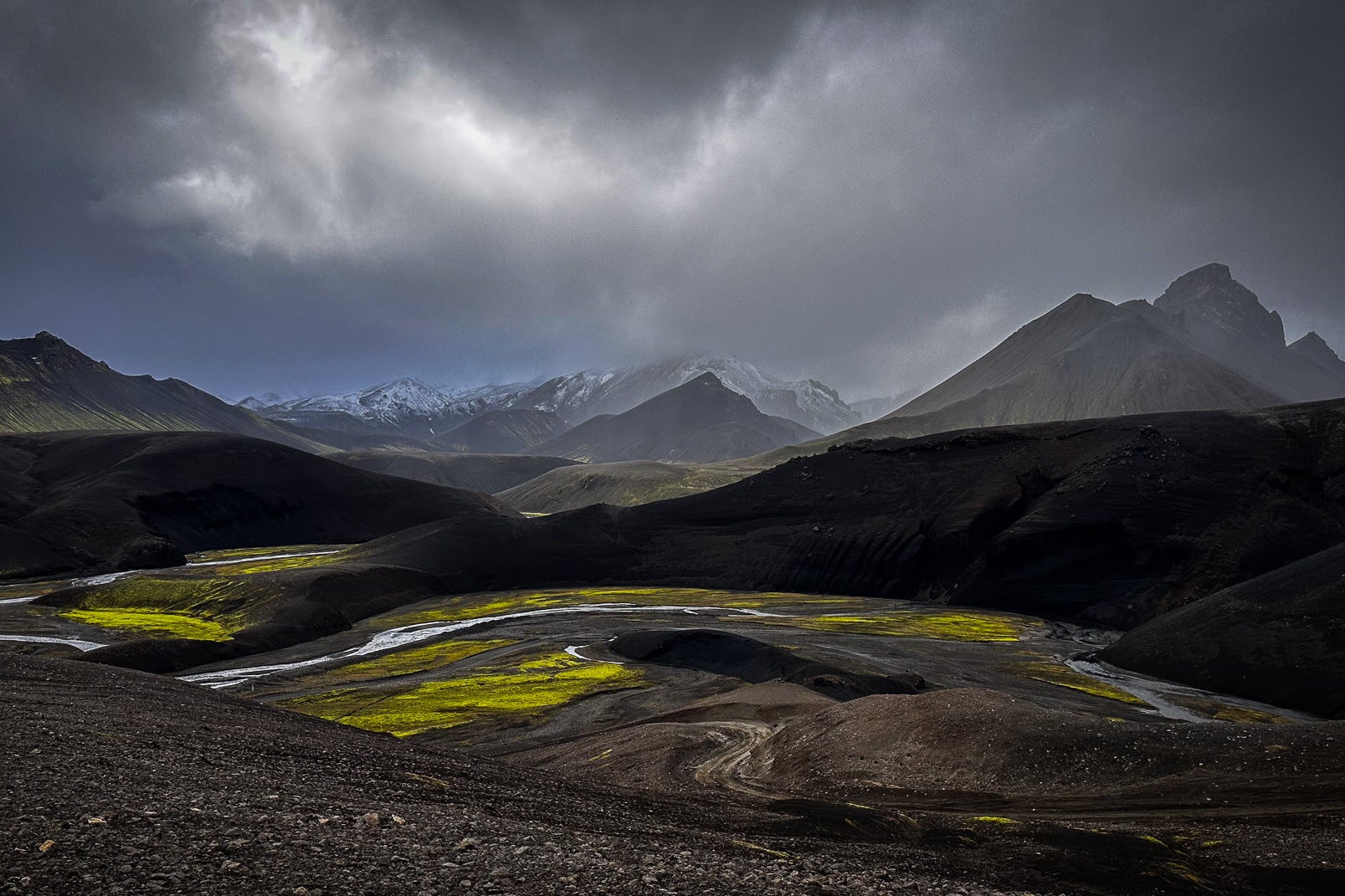
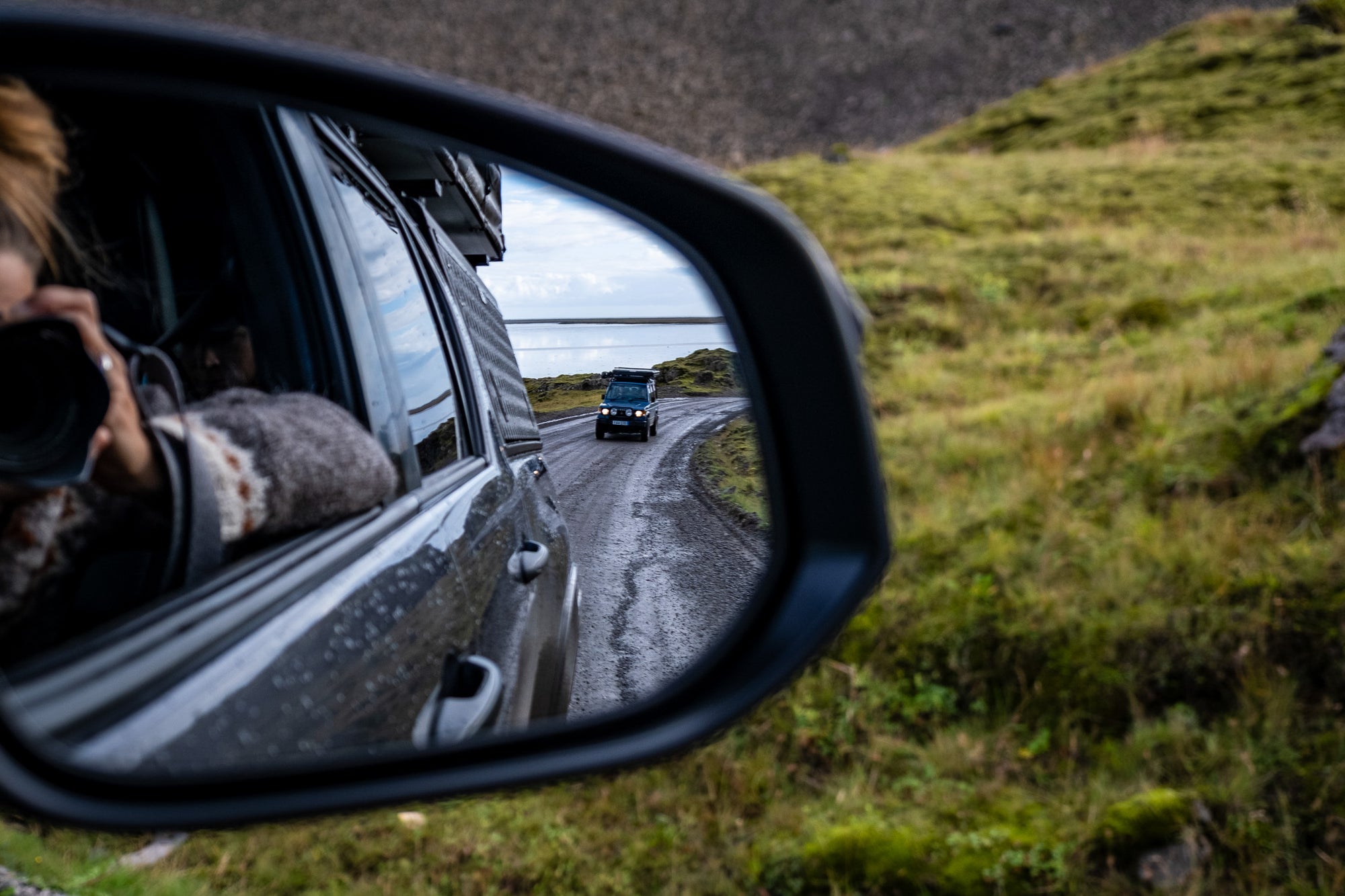
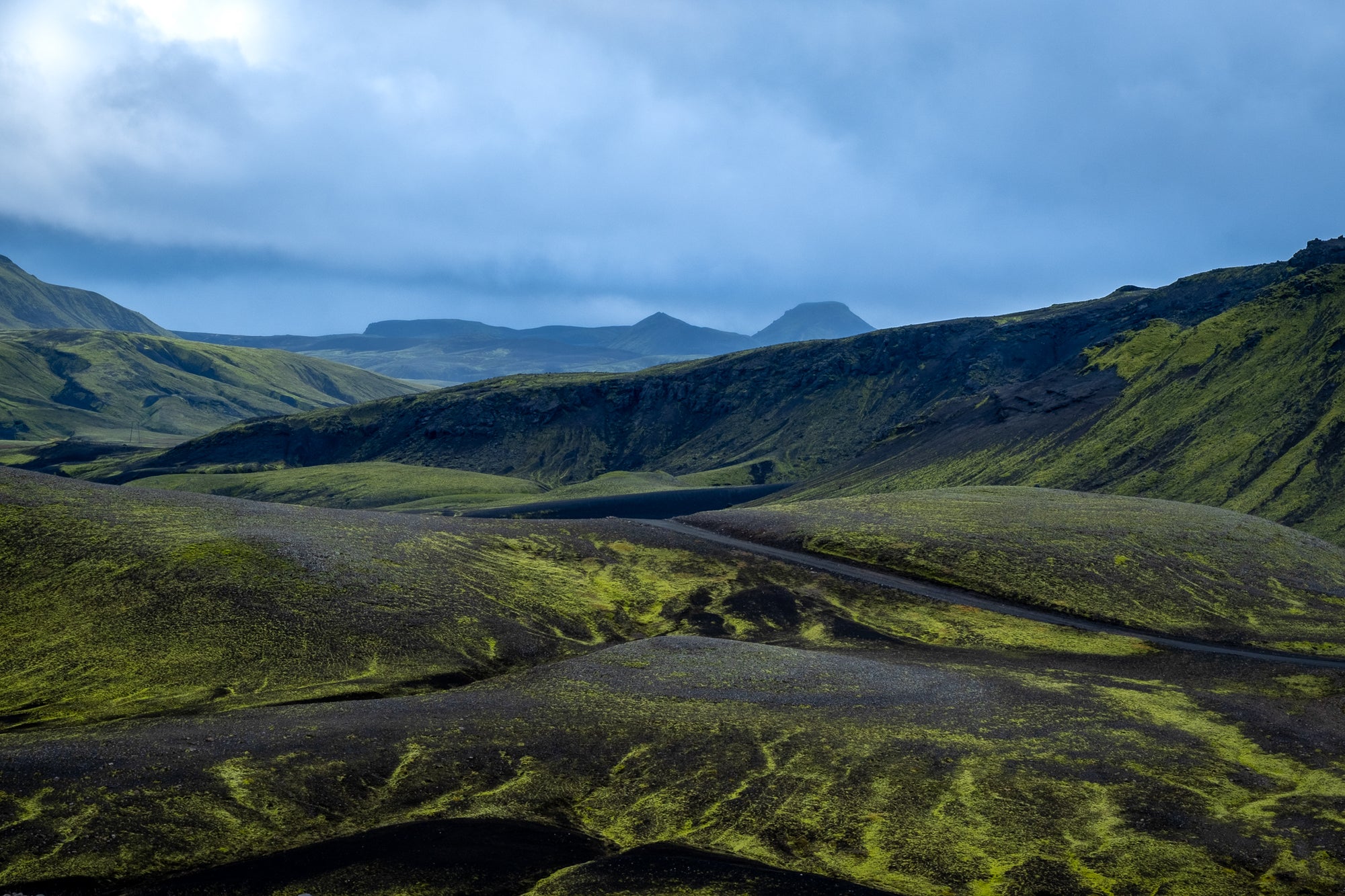
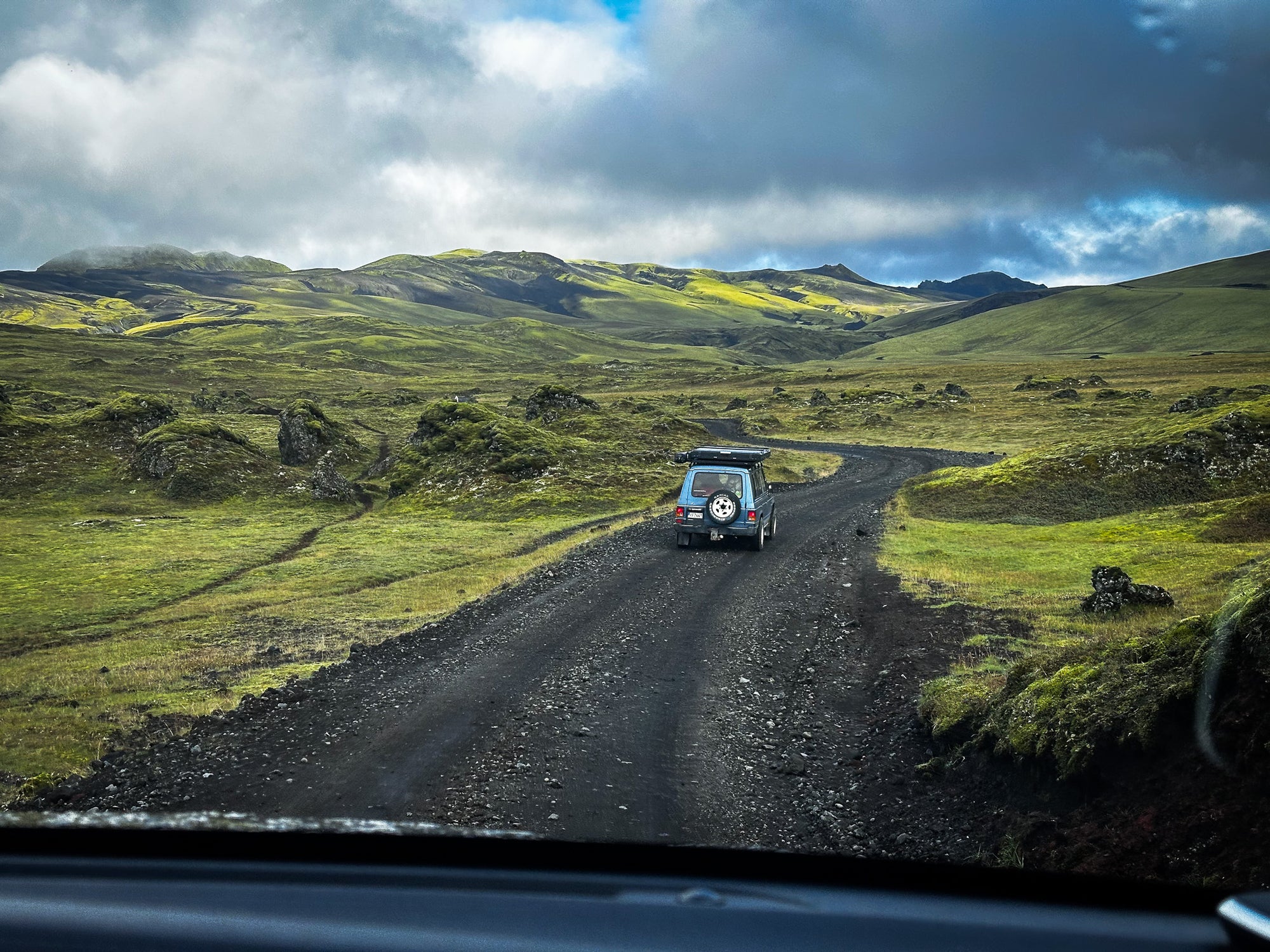
The F-roads are a network of gravel roads winding through lava deserts, mountain passes, across glacial rivers, and past volcanoes.
These are not roads in the usual sense. They are more like an agreement between you and nature that you know what you are getting into. You need to be prepared – you will find neither gas stations nor grocery stores.
The F-roads open sometime in June and close again in September, depending on snow and ground conditions.
The exact dates are determined each year and published by the Icelandic Road and Coastal Administration Vegagerðin. Trying to enter before opening is not only foolish — it is illegal and can lead to heavy fines.
F-roads require four-wheel drive. Not as a recommendation, but as a requirement.
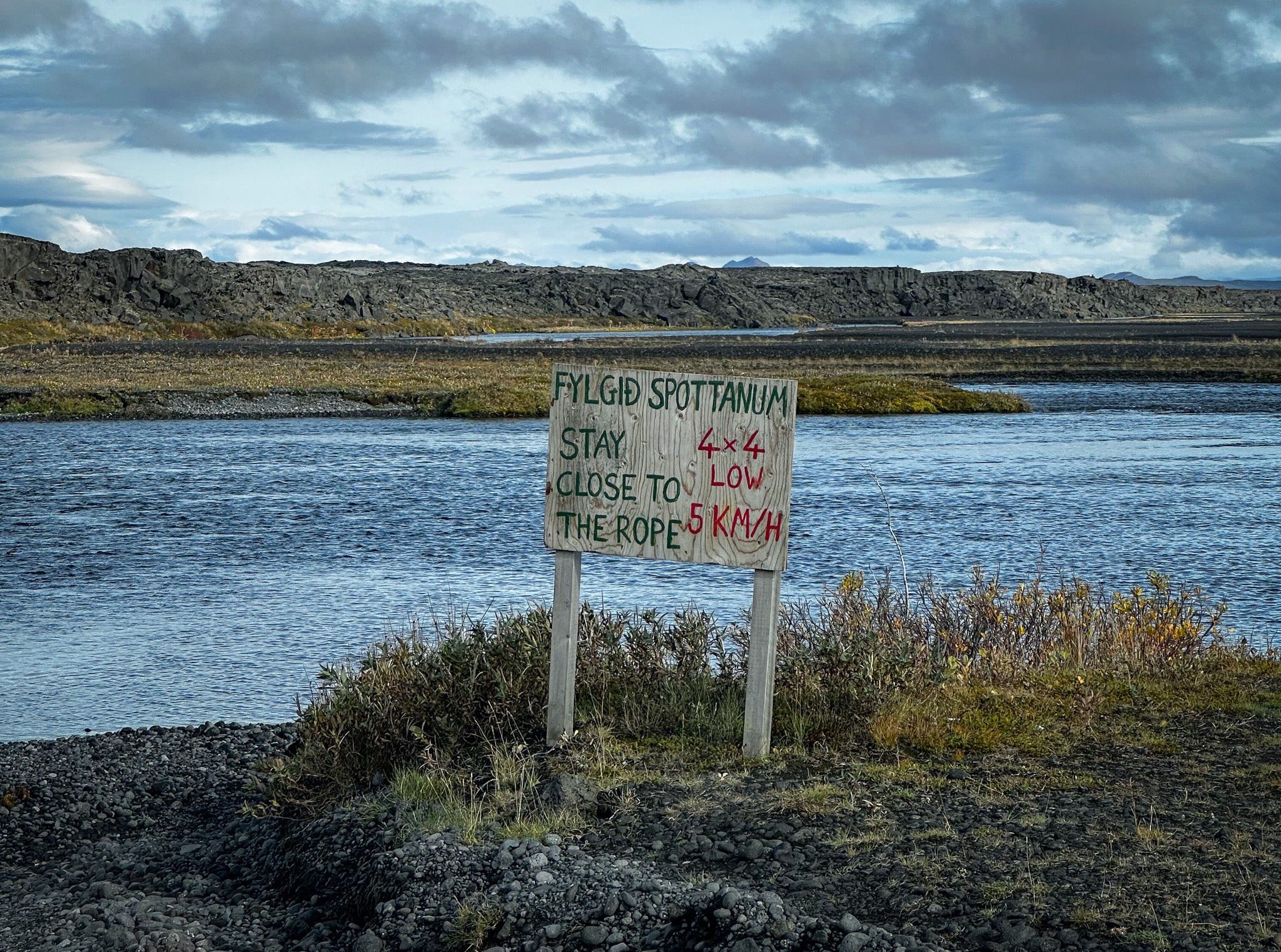
Along many stretches, you must cross glacial rivers without bridges, and the water depth can vary dramatically depending on the time of day and whether it has rained upstream.
Driving over these water crossings is a thrilling experience and one of the things we looked forward to the most.
The highlands offer some of Iceland's most untouched campsites — simple, often without facilities, but with views that are hard to put into words. It is a different kind of Iceland than the Ring Road tourist’s, and you notice it immediately when you drive in and leave the asphalt behind.
These roads should only be driven when the journey is the goal. The roads are usually uneven and the speed rarely over 50 kilometers per hour.
River crossings (fords) in Iceland – how to do it
Driving through rivers and streams was, in our opinion, one of the absolute highlights of the trip, but requires respect and preparation.
How to do it:
Stop and check the depth. Drive slowly in low gear, never stop in the water, and drive in a curve, diagonally downstream.
If you are unsure about the water depth, walk in yourself to check, or wait for another car.
Scattered throughout the Icelandic highlands are also park rangers who can assist if you have questions. Phone numbers for these are on signs when you enter an F-road. We met several during the trip and all were very friendly (fun addition – all were young women).
Lesson learned:
At F88 we were close to being stuck when a car got stuck. Always have a plan (and a friend with a tow rope!) before you drive in.
Visiting this page on mobile? Swipe left to see more pictures.
Our route – 7 days in Iceland's highlands
Day 1 – Seyðisfjörður & Vestrahorn
We drove off the ferry in Seyðisfjörður and were met by dense fog. We saw practically nothing as we drove over the mountain pass (which by the way is closed in winter, so it is not possible to get to and from the town by car then). Once at the top, it suddenly cleared up and we were greeted by a sunny beautiful landscape.
The first stop was at the airport in Egilstadir where we picked up our sixth travel companion, who had flown over. The second stop was a mighty waterfall and then we drove onto our first gravel road that took us south.
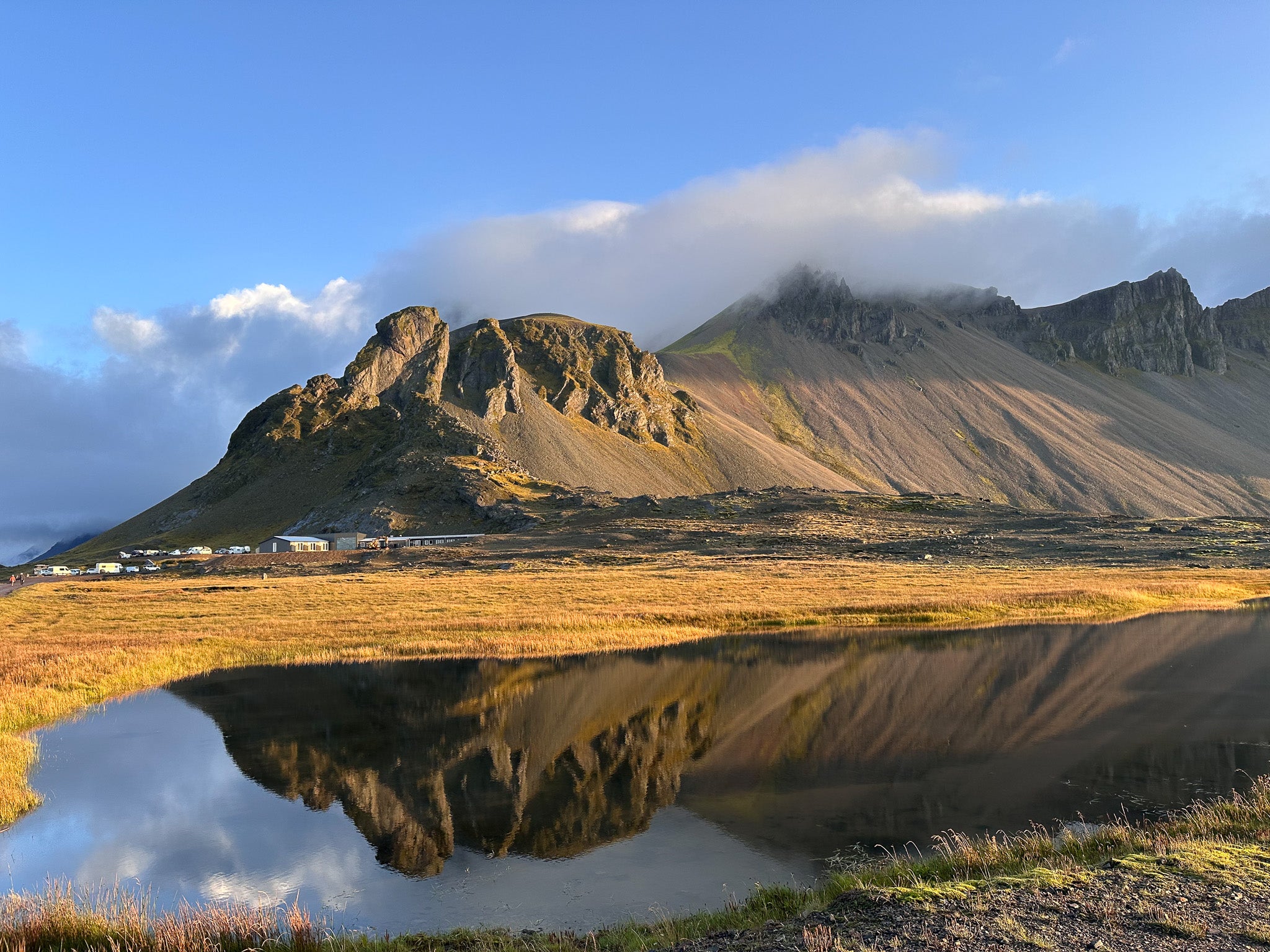
The first night we stayed at a campsite by Vestrahorn. Early in the morning we woke up by chance, looked out and realized the weather was too good to miss. Sunrise, calm wind, low tide. We could walk straight out into the sea. The black beaches were mirror-smooth and the mountains reflected in the water. One of those moments you don’t plan – but never forget.
Day 2 – Jökulsárlón and into the interior
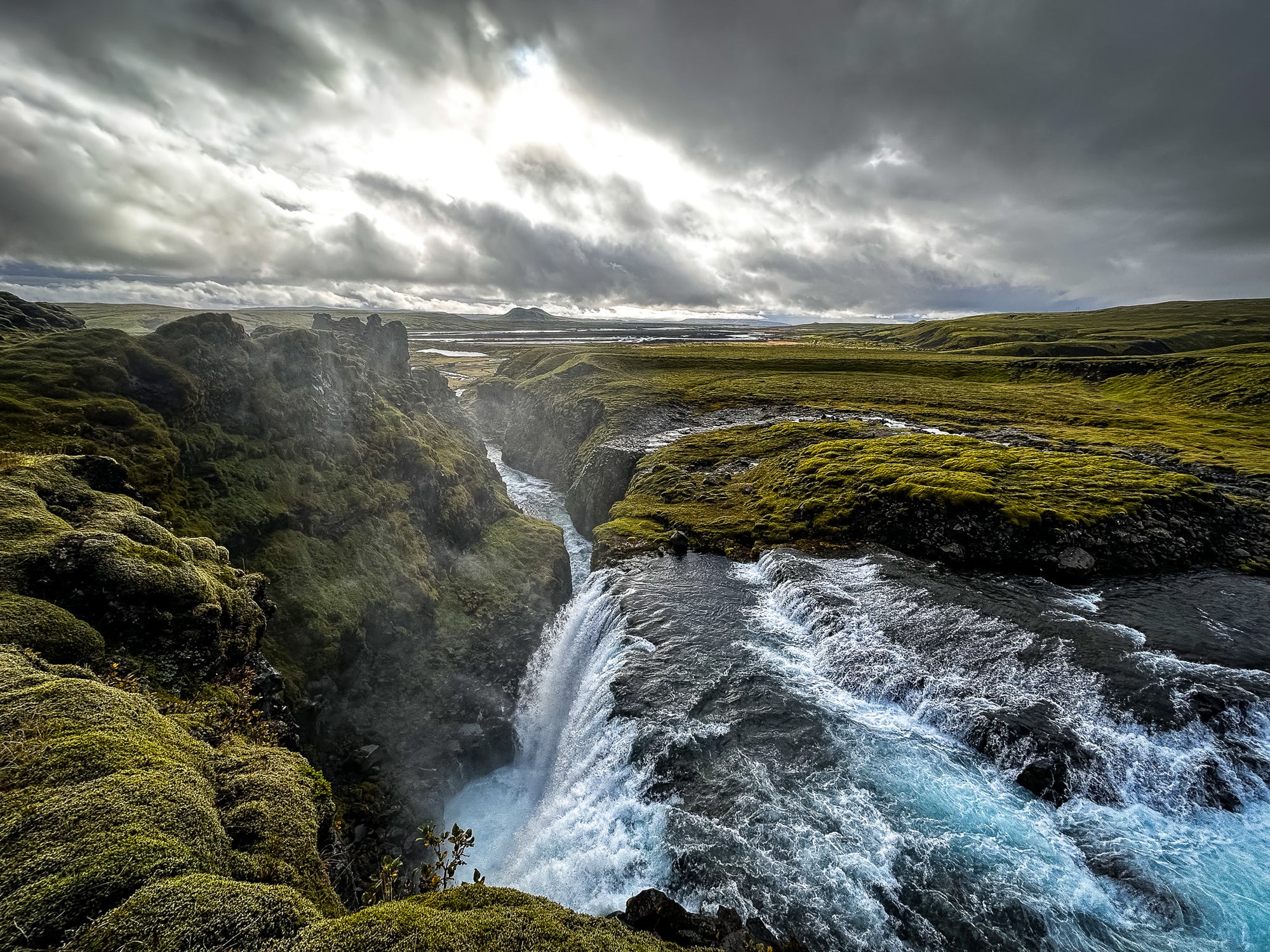
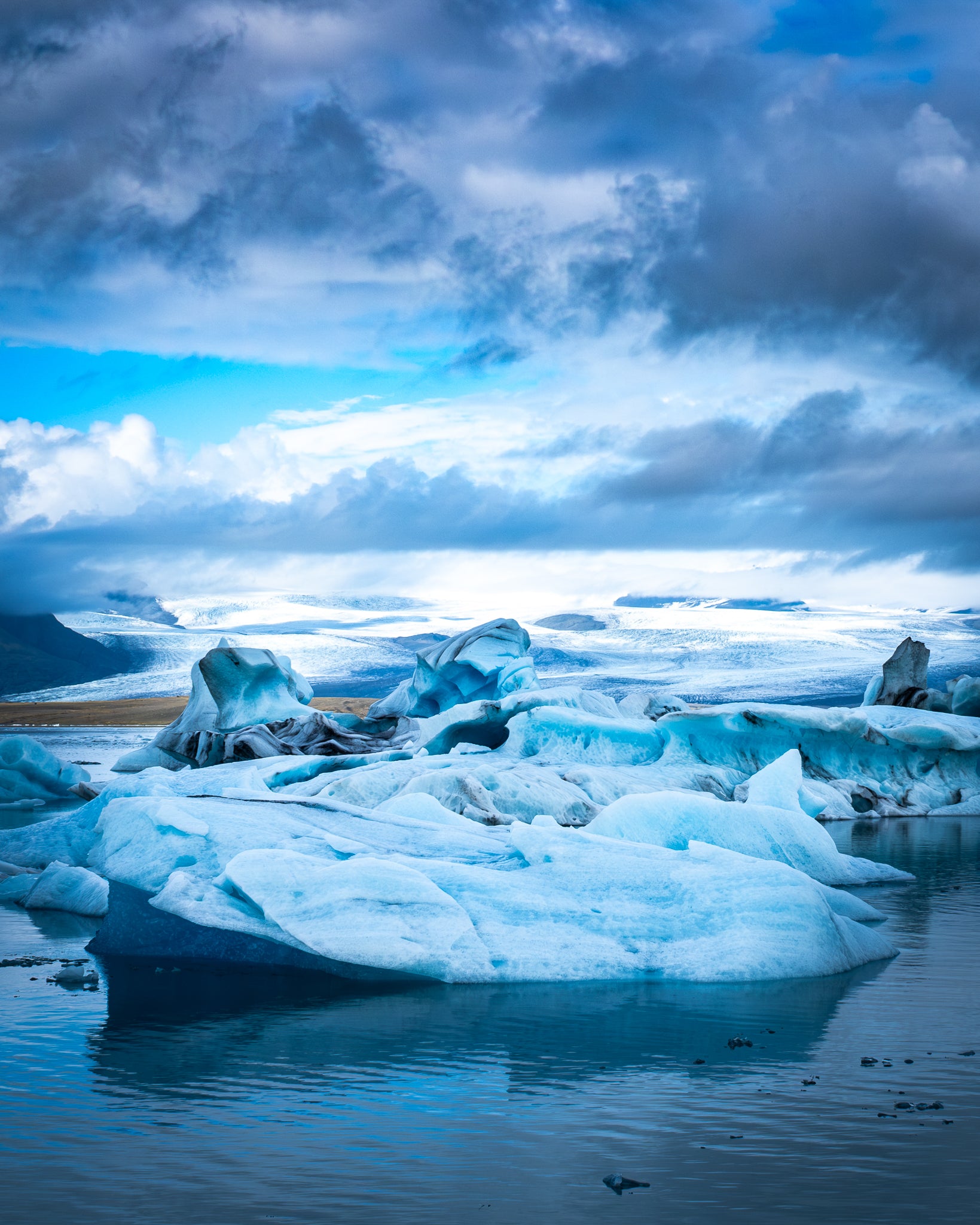
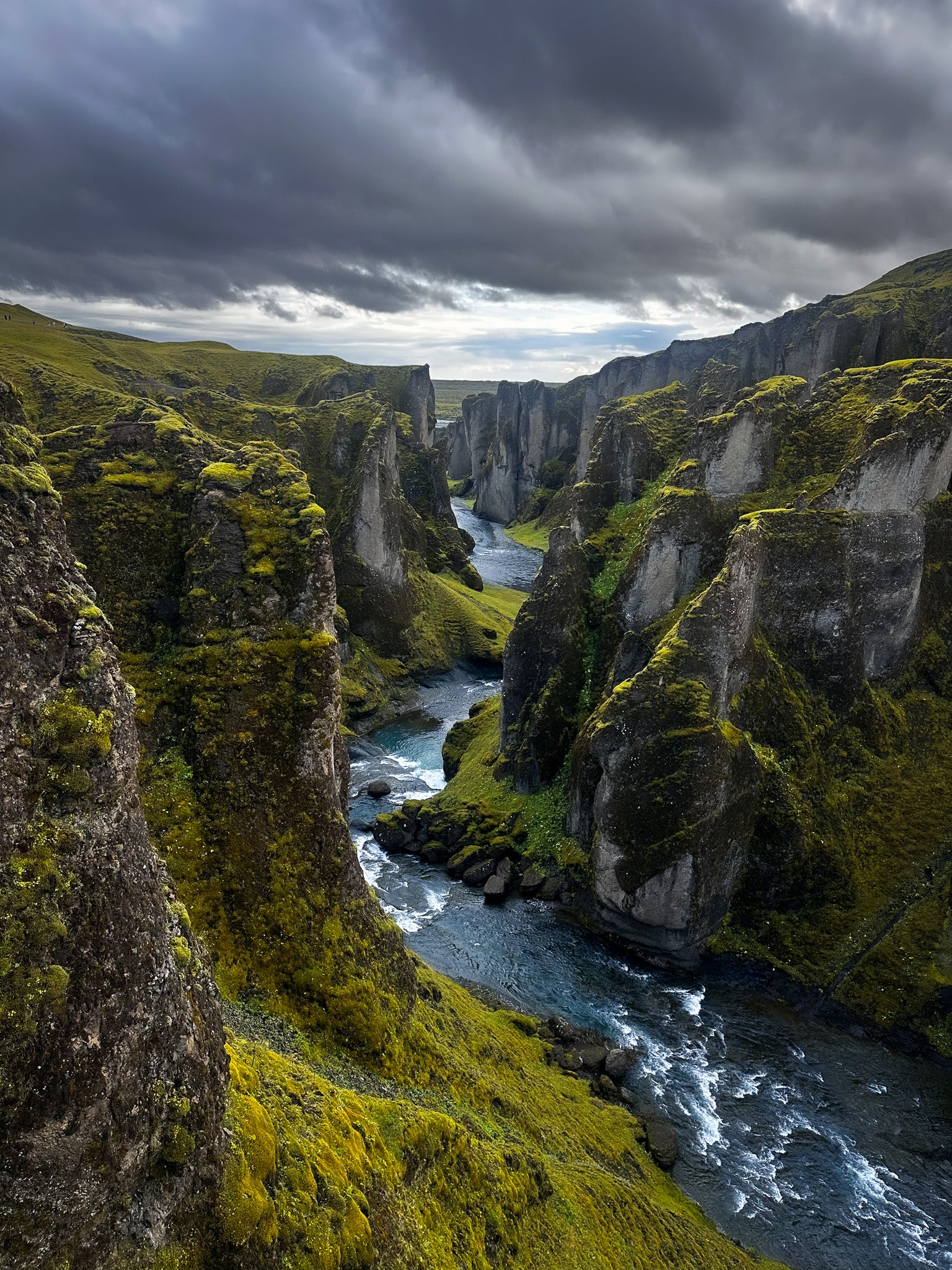
We continued along road 1 with a stop at the Jökulsárlón glacier. Further through a lava field covered with moss and a stop at a mighty canyon near the intersection of road 1 and F209 (we lost the name, not the experience).
Then we headed into the interior via F209 and now the adventure really began. The contrast between coast and highland is great. Very quickly we were completely alone, nice after driving on Highway 1. We spent the night at a small remote and spartan campsite.
Visiting this page on mobile? Swipe left to see more pictures.
Day 3 – F208 to Landmannalaugar
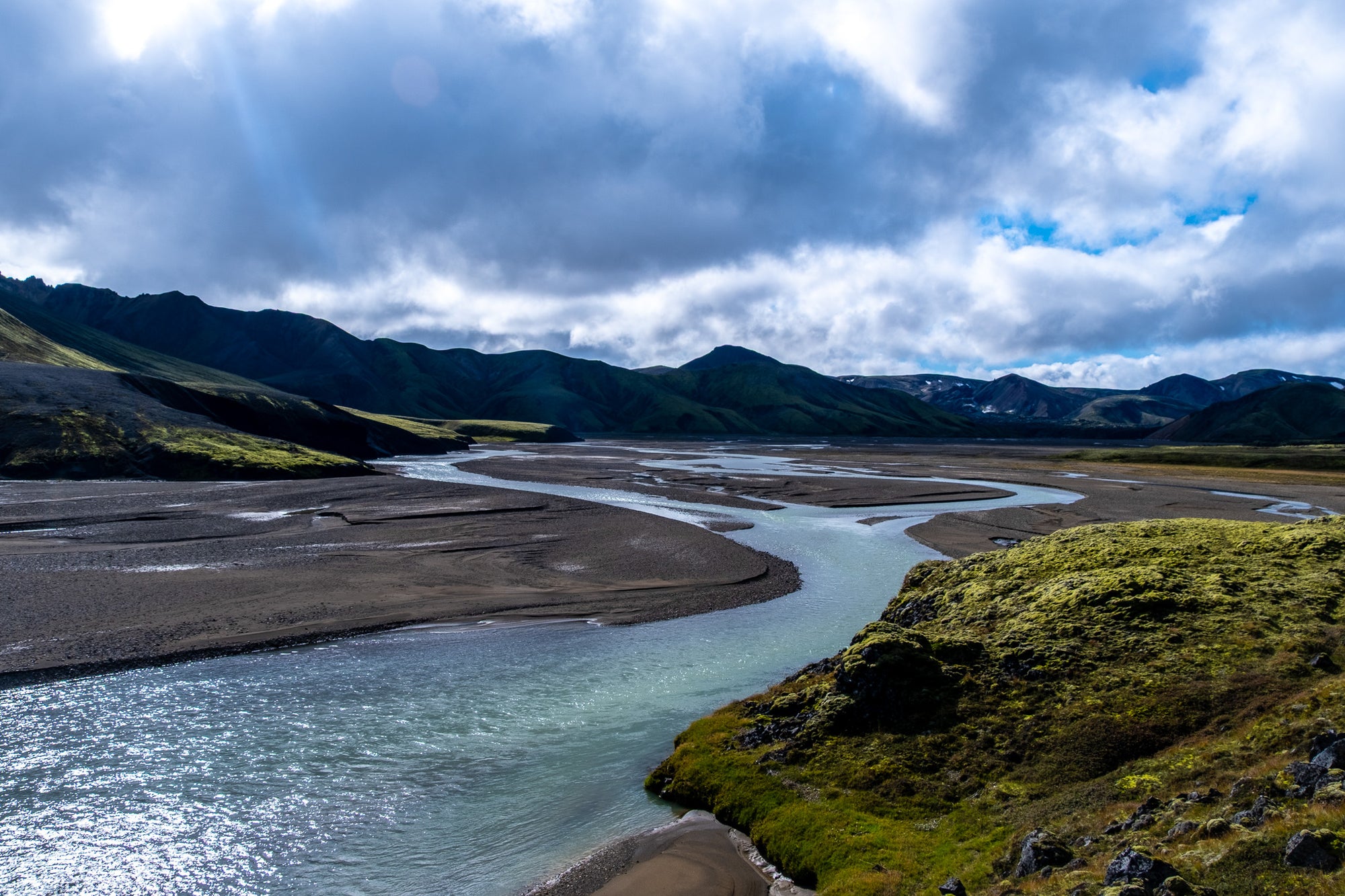
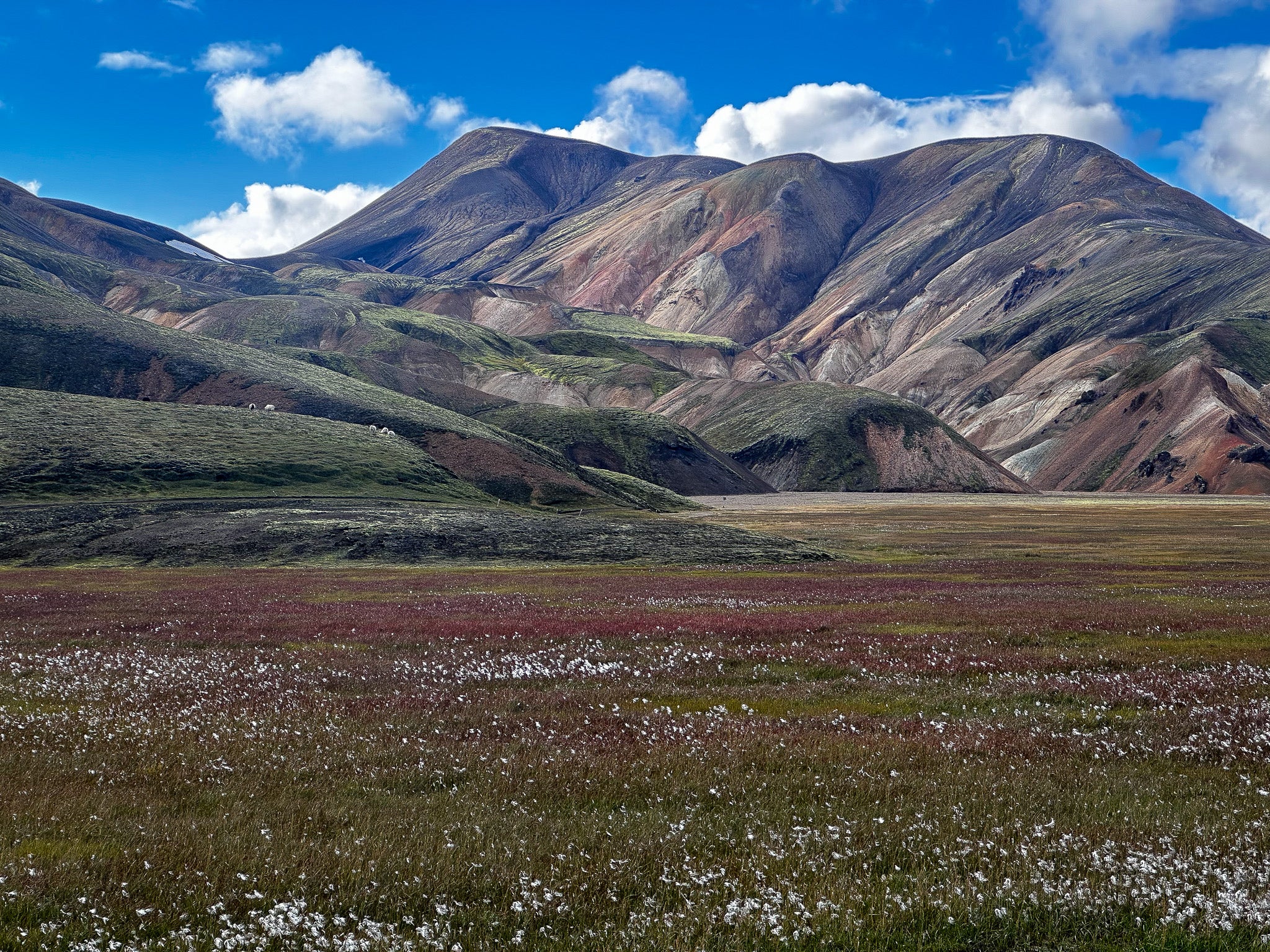
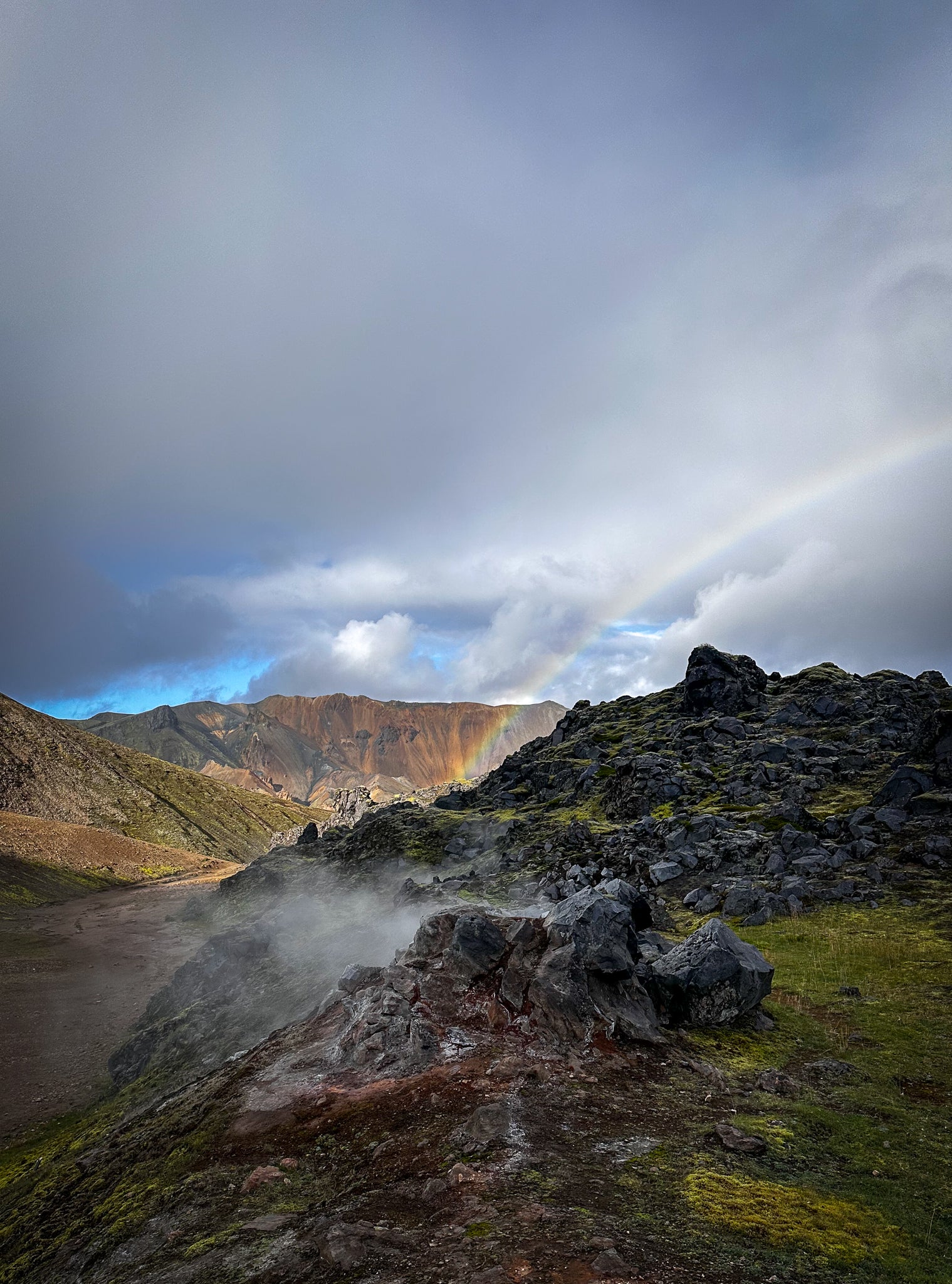
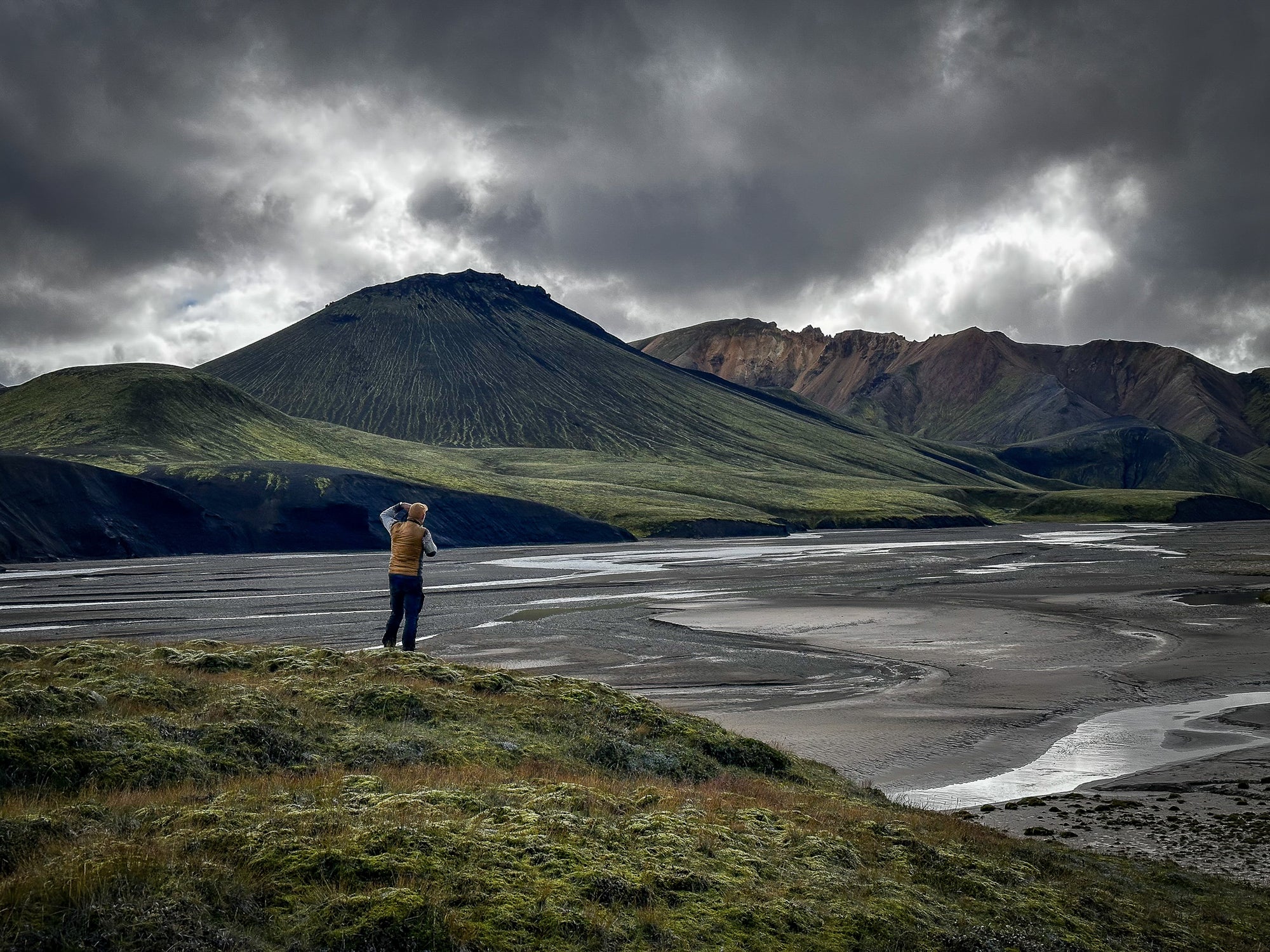
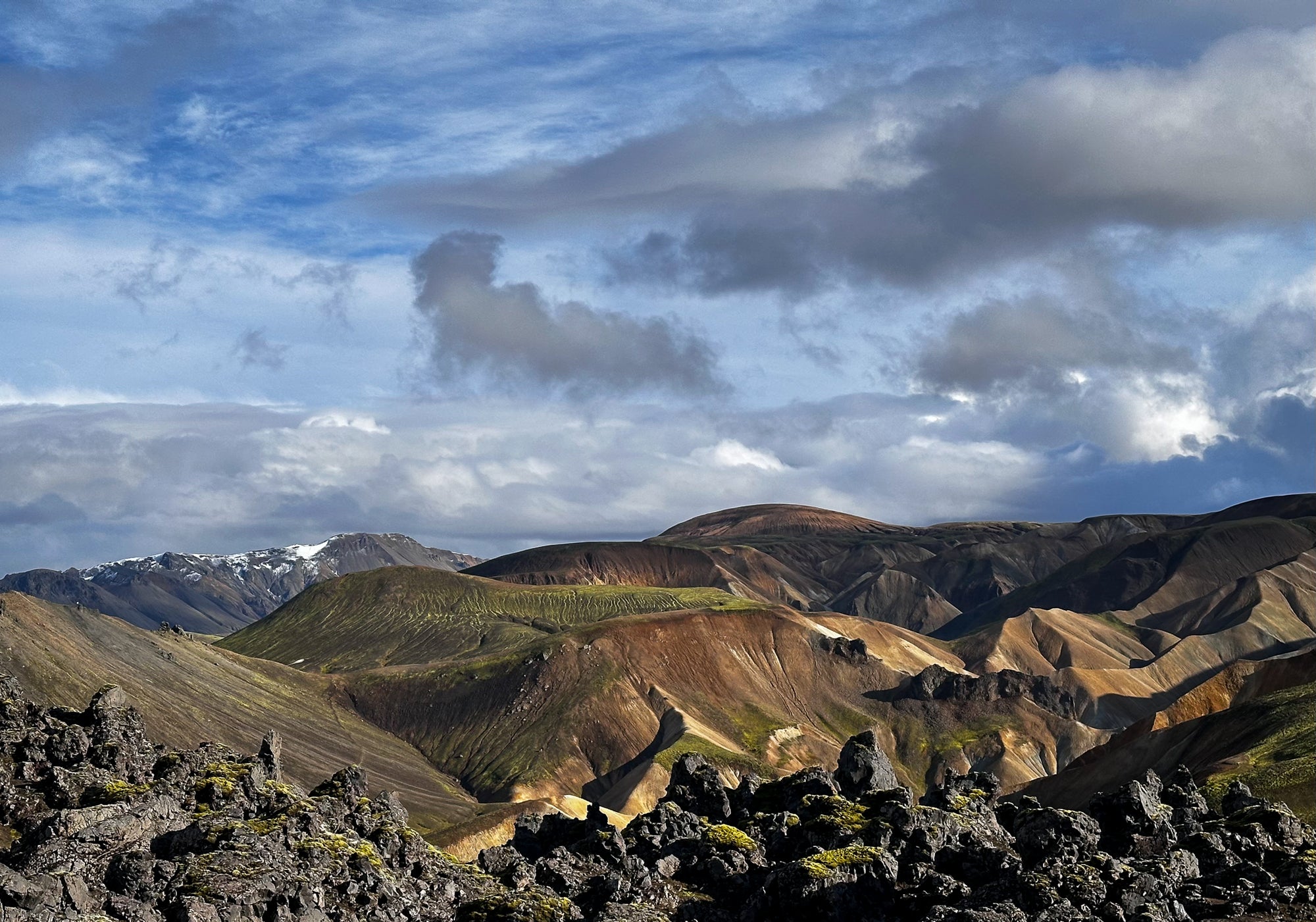
The most beautiful stretch of the entire trip. If you are going to do an F-road, this is the one (at least of those we tried!). F208 to Landmannalaugar is completely unreal – color-shifting mountains, lava fields, and several fun water crossings.
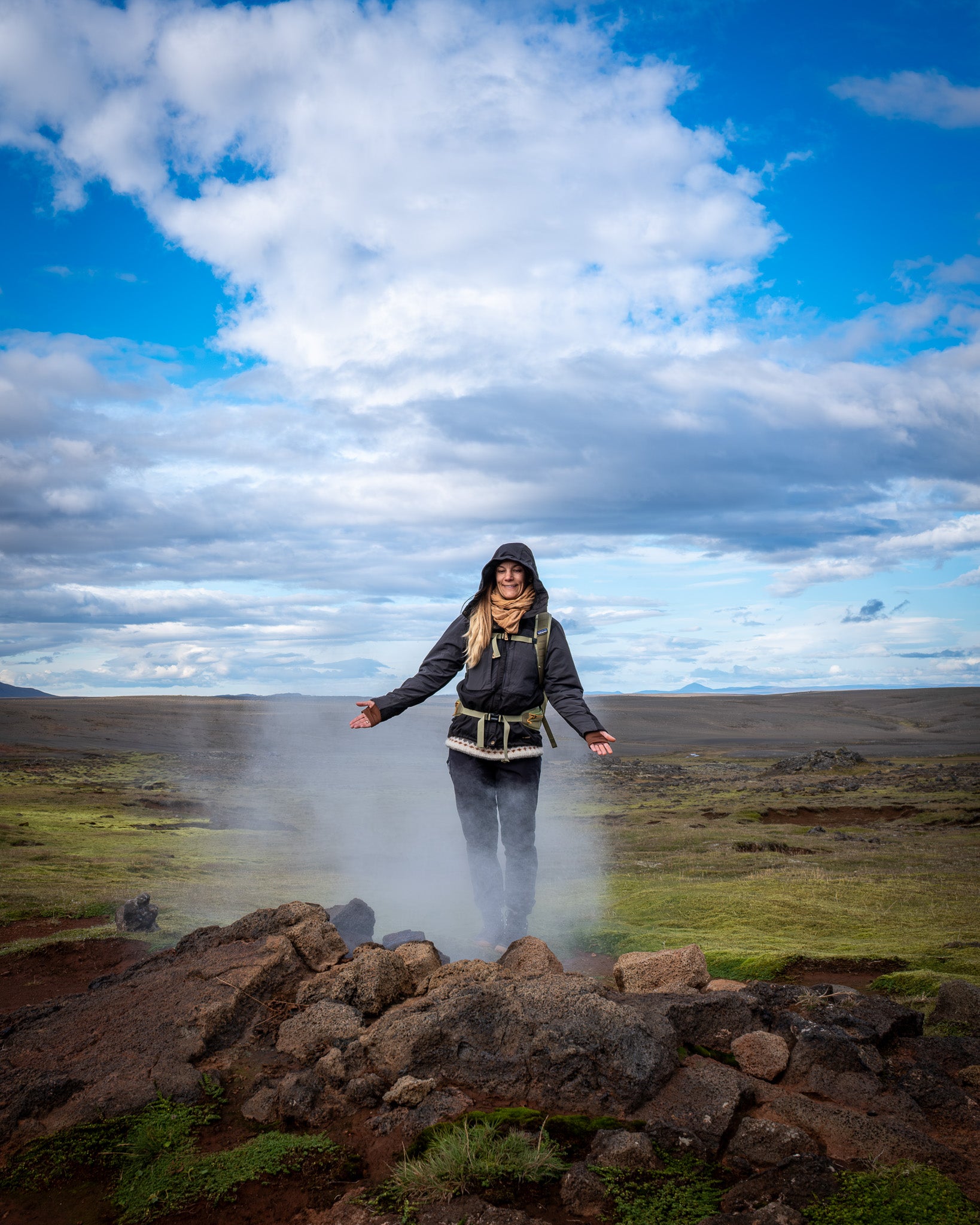
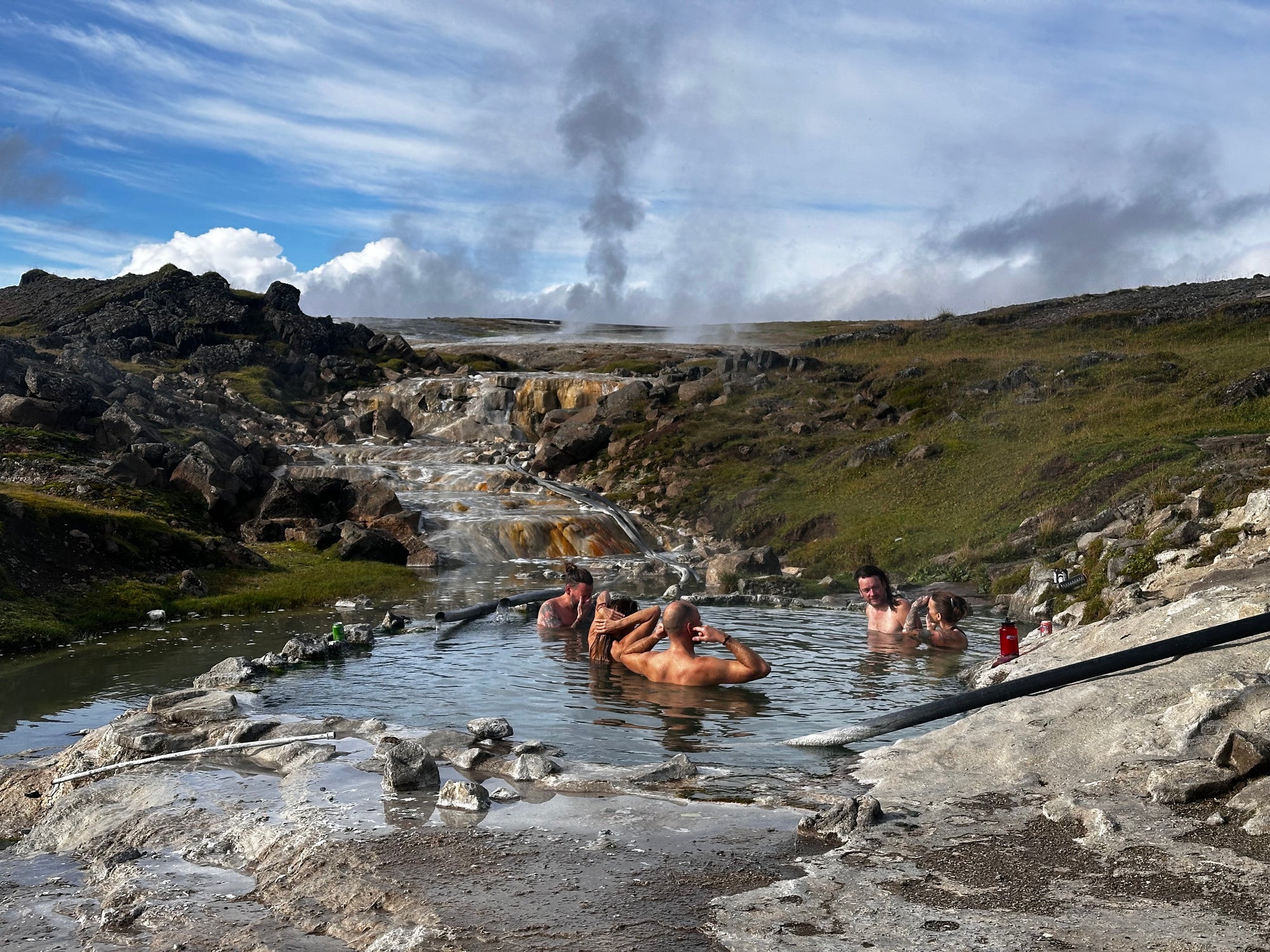
Once at Landmannalaugar we were lucky with the weather – sun and calm winds. We hiked up the mountains which are colored in various red and green shades, up to a sulfur field where warm smoke seeps out of sulfur springs. Many visitors come here during the day as you can book trips from Reykjavik, but they left around 5 o'clock while we and a few other campers stayed and later bathed in the warm spring down by the campsite.
.
Day 4 – F225, Hella & the highlands again
Via F225 we made our way down to road 26 and further to Hella for provisioning. The rainiest hours of the trip, luckily coinciding with the most boring paved road section.
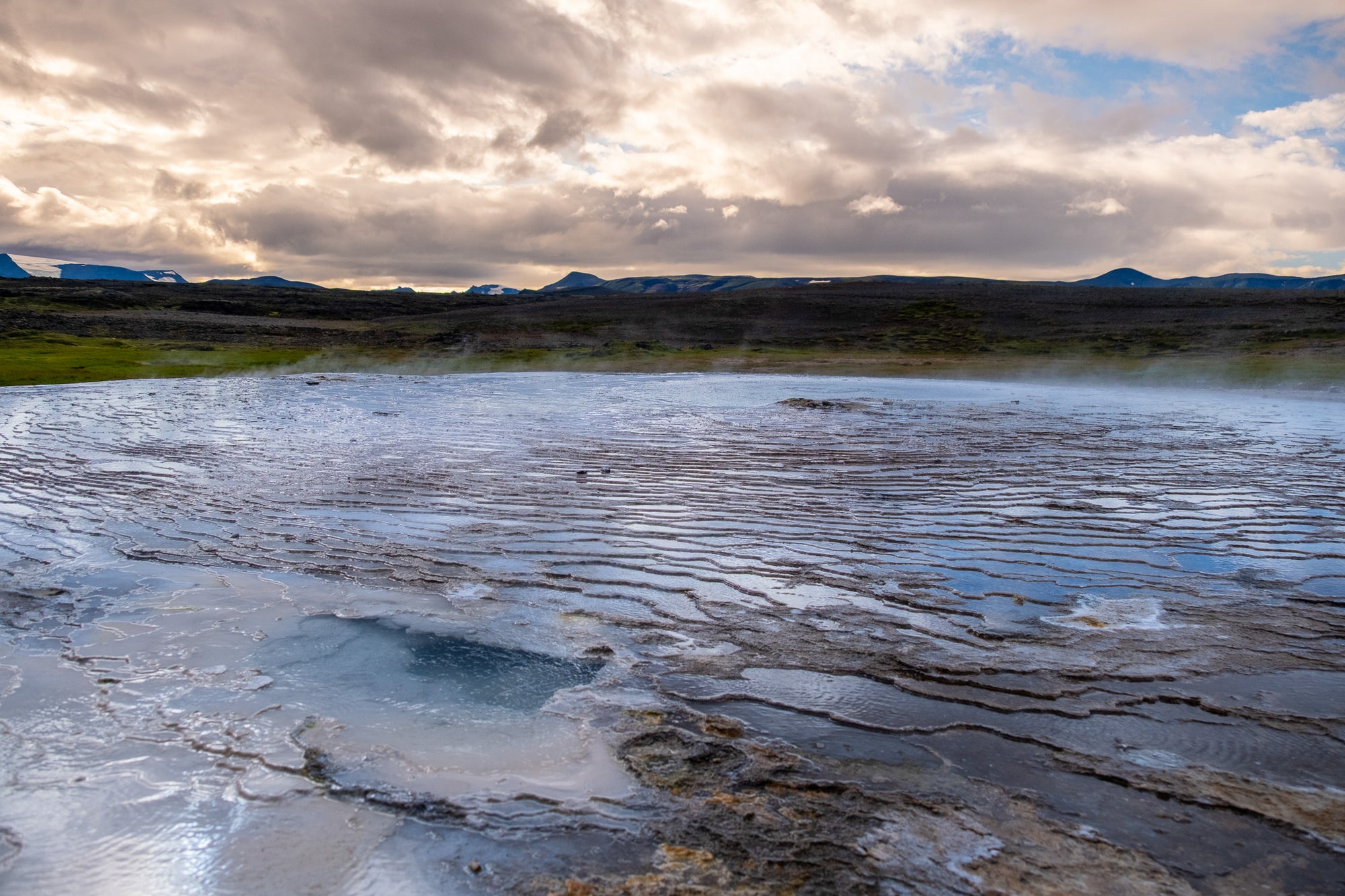
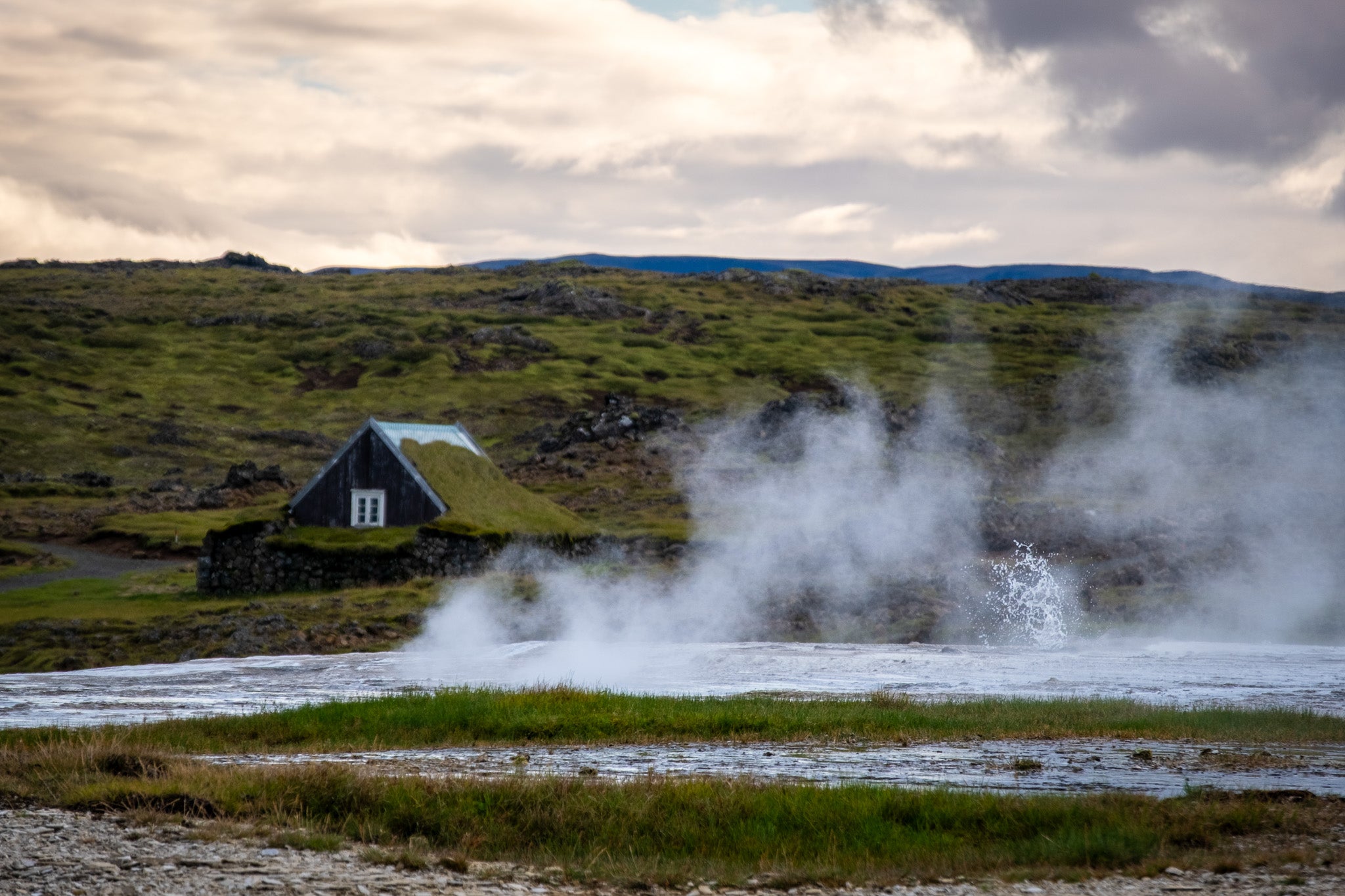
Once on F35 we can talk about potholes all the way to our destination Hveravellir, a remote geothermal very active area with camping. It took 3–4 hours at about 20–30 km/h. We entertained ourselves with quizzes and goofing around between cars via walkie-talkies.
Few people, lots of hot springs and geysers. A huge contrast to the tourist-heavy and more accessible Geysir area which we passed quickly earlier in the day.
We stayed here two nights. Hiked. Bathed in hot springs and relaxed.
Day 5 – Möðrudalur
We drove north, dropped off Ola who had to take a bus to Reykjavik for a flight home, and then continued east on Highway 1. Via F905 we reached Möðrudalur, Iceland's highest located farm, in the late afternoon.
Grass camping (unusual in Iceland), calm evening, brilliant sun, northern lights at night.
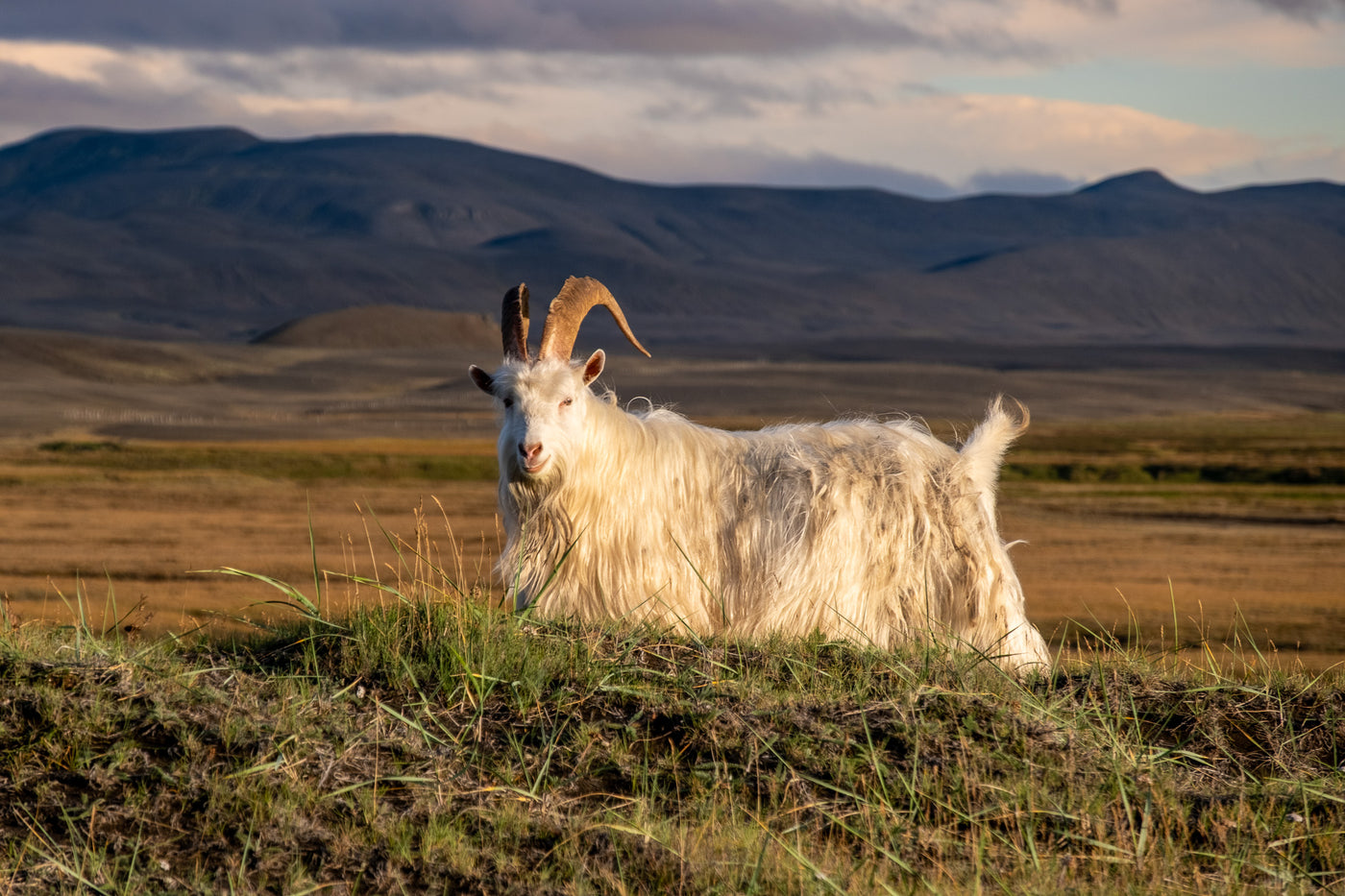
We saw sheep, fox, pigs, and a tame reindeer that lived there. You hear – it was good.
Day 6 – Askja & Dreki
Via roads F905 and F910 we made our way to the volcano Askja. Moon landscape, bumpy roads, several water crossings. We like to drive through fords – and here we really got to do that.
We camped at Dreki, at the foot of Askja. Unfortunately, there was fog up at the crater, so no view – but down at the campsite it was clear and the surroundings made it worth it anyway. The campsite itself was closed for the season, so no facilities available except toilets.
Day 7 – F88 & back to the ferry
The last day we took F88 back towards Seyðisfjörður and encountered one of the trip's biggest fords.
Björn was a bit too eager on the gas pedal and got stuck. After a few nervous seconds, however, he got free and we made it back to Highway 1 again.
The ferry left in the evening and we made sure to have plenty of time. Tired, dirty, and very satisfied, we drove onto the ferry.
Are 7 days enough for Iceland's highlands?
Honestly? No. Iceland requires more time.
For us, it was not possible to be away longer, due to small children at home and lack of babysitter. But if we had the opportunity, 2–4 weeks would have been perfect.
Now we have to look forward to being able to make another trip in the future. Because that will definitely happen.
.
.
Subscribe to our newsletter
Get exclusive offers, inspiration and news straight to your inbox